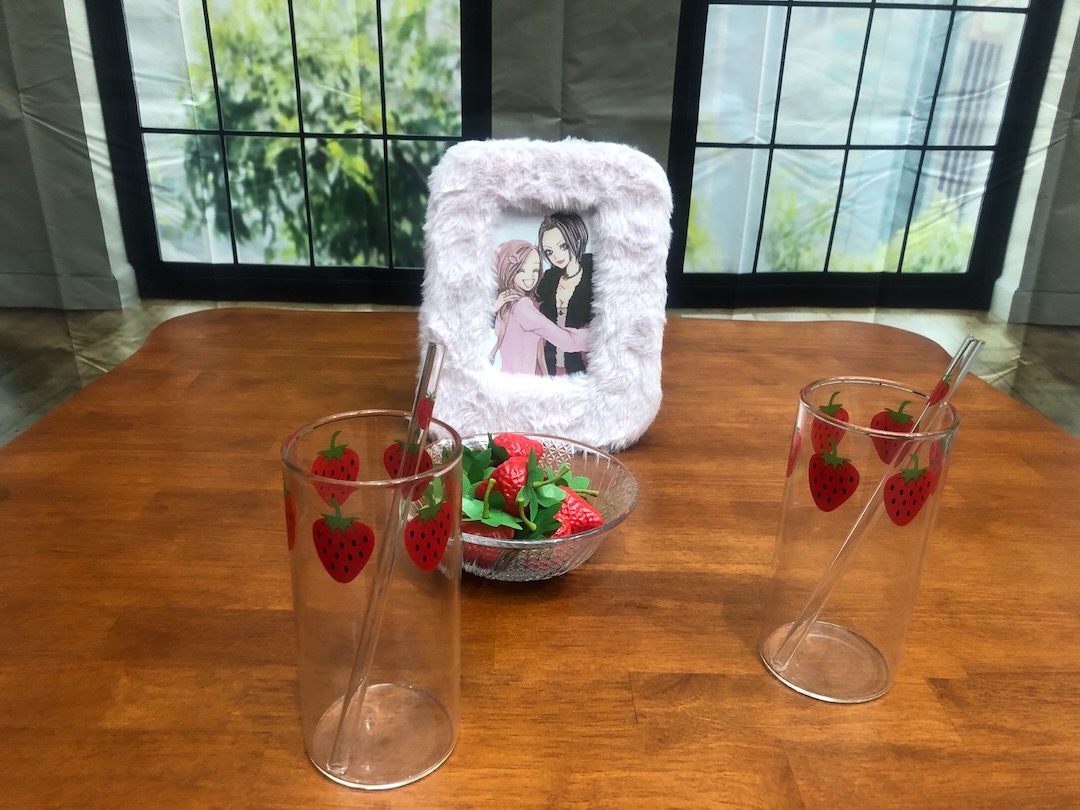
The Nana Apartment 707 display for BKawaii’s market at Little Tokyo Galleria, Sunday, September 6. (Pic: Liz O.)
On Sunday, Little Tokyo Galleria was bustling in a way that I had never seen before. Maybe it was the rain that fluctuated between a drizzly L.A. storm and a for real storm throughout the day. Maybe it was the combination of Labor Day Weekend and a Dodgers game that evening. IDK, but I like to think it was Nana.
The Little Tokyo Galleria is a very small, quiet indoor mall on the edge of the neighborhood that borders the Arts District and Skid Row. Outside of a grocery store and Daiso, it’s best known locally for Max Karaoke Studio and the bowling alley XLanes. On the weekends, though, the second floor of the three-story building hosts marketplaces that are similar to the artist alleys at fan conventions. People sell anime-related fan art, cute jewelry and accessories, plus vintage clothes, at stalls that are set up throughout the common area. On this particular Sunday, a group called Bkawaii organized a market inspired by the manga (and anime) Nana called Apt. 707.
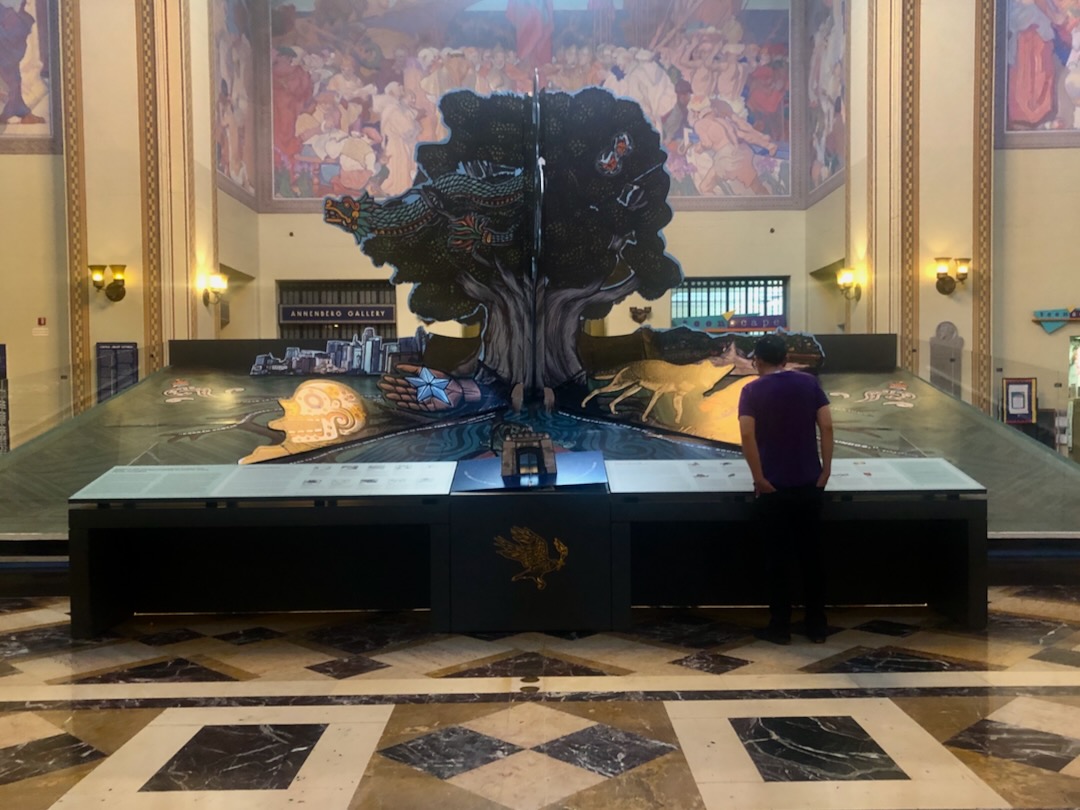
Luceros y Penumbras: The World’s Largest Pop-Up Book in the Rotunda at Central Library (Pic: Liz O.)
“I’m going to show you something cool,” I say to my husband while leading him to the back of a room on the bottom level of Central Library. “And, by cool, I mean super dorky.”
I love browsing through old stuff. It’s not a nostalgia thing. I don’t long for the past. I just like to make connections between what was and what is. It’s how my DJ brain works. Like, a significant moment in my evolution as a music nerd came in my late teens, when I stopped thinking of ‘60s soul as my parents’ music and realized it was the basis for most of what I liked. Every song builds on what came before it. DJing is just figuring out how it all fits together.
Movies are similar. The other night I just happened to catch I Want to Live! on TCM. Susan Hayward plays a woman found guilty of murder and sentenced to death in the 1950s. It’s a terrific movie – Hayward won an Oscar for her performance – and, in the midst of it, I thought, OMG, this is Female Trouble! Divine as Dawn Davenport was totally channeling Susan Hayward as Barbara Graham!
This is cultural literacy, something that’s lost when you’re served media via a corporation’s algorithm. You think you’re learning something because your feed is overloaded with variations of the same “How New Order Made ‘Blue Monday’” video, but you aren’t. You’re just parroting AI-generated summaries of Wikipedia entries. If you want to be really culturally literate, you need to get out into the world and figure things out for yourself. That’s why I love thrift stores and record shops, museums and libraries. Particularly, I love Central Library.
Los Mirlos live at Jerry Moss Plaza at Los Angeles’ Music Center on Saturday, 8/15/26 (Pic: Liz O.)
On Saturday night, Los Mirlos wasted no time transporting the downtown Los Angeles crowd to the jungles of Peru. Dressed in green track pants and matching print shirts, the long-running band brought cumbia Amazonica to the Music Center’s Jerry Moss Plaza for a free show that kept the large, multi-ethnic and cross-generational crowd dancing for more than an hour-and-a-half to rhythms that evoke rolling rivers and rain patter.
Founded in 1973, Los Mirlos is one of the best known cumbia outfits to emerge from Peru onto the world stage. They’re the subject of the 2022 documentary, La Danza de los Mirlos. Last year, they became the first Peruvian band to play Coachella. Earlier this year, they released The World Meets Los Mirlos, a collection of collaborations with artists that include Colombian pop star Juanes, London-based psych cumbia band Los Bitchos, Puerto Rican rapper Guaynaa and American rock outfit 311. Saturday night’s concert came in the midst of a U.S. tour that runs through early September.
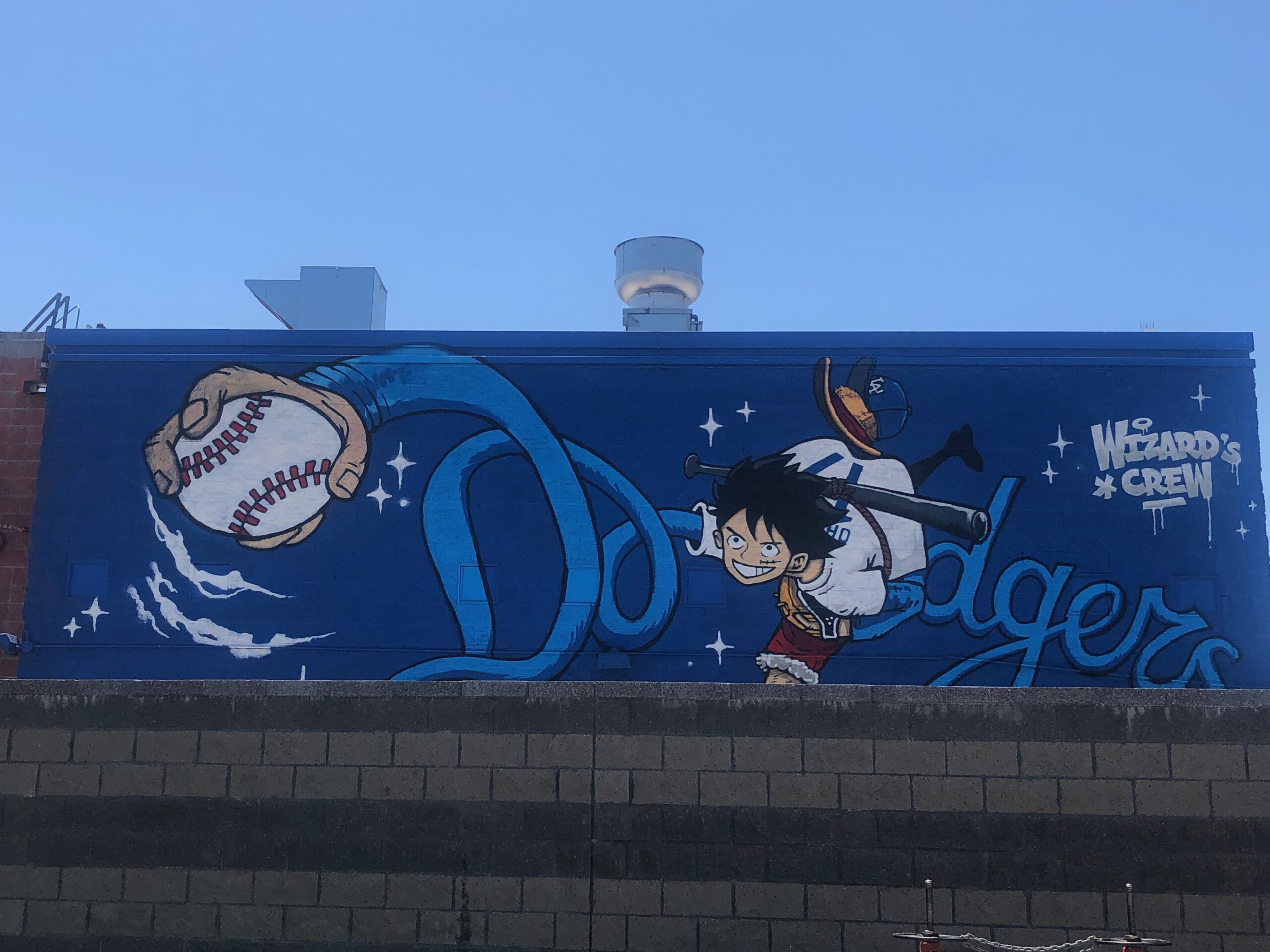
One Piece meets Dodgers baseball in Wizard’s Crew’s Little Tokyo mural. (Pic: Liz O.)
There’s a Dodgers/One Piece mashup mural standing on a short, strip mall wall right outside the Little Tokyo Metro station and it’s probably the best visual representation of the neighborhood at this moment. Monkey D. Luffy, the manga/anime’s main protagonist, is pitching with a rubbery arm that curves into a D and O as he releases the ball, an IYKYK reference from artists Wizard’s Crew for those who have at least some familiarity with One Piece. The rest of the Dodgers name trails behind the character in ribbon-like cursive writing, bringing together the two pastimes that have been driving hordes of visitors to this historic, downtown Los Angeles neighborhood in recent years- anime and baseball.
We’re walking along Figueroa Street’s Highland Park hipster drag at 9 p.m. on a Thursday night, looking for something to eat. Within a span of a few blocks, though, we’re greeted by one closed sign after the next. How is it possible that both bar-adjacent pizza joints are already done for the night?
We’ve been here before, maybe a year ago, when we walked two miles (no exaggeration) before stumbling upon a cramped, hole-in-the-wall Mexican restaurant that serves to what is now considered Los Angeles’ late night crowd. Maybe we could have gone back to that spot, but we decided to catch the Metro to Chinatown, where there are still a small handful of restaurants open until at least 10 p.m.
I shouldn’t have to explain to readers that 9 p.m. is a perfectly reasonable time to eat dinner. People around the world know this as a fact. An actual late night meal is after midnight. I used to indulge in those too, but gave up the habit post-pandemic, not because I have grown sensible in my old age, but because reliable late night spots in Los Angeles are now so few and far between that trying to find food at 2:30 a.m. has become a hassle I don’t need after a DJ gig.
It wasn’t always like this. Los Angeles used to be a proper city. It wasn’t a 24/7 city, but we didn’t operate on farm time either. If you got off work late, you could still get take out or make a grocery store pit stop on the way home. You could meet up with friends for coffee at night or grab a bite to eat after the concert/club/bar. Now, good luck finding food beyond 8 p.m. You should have done your meal prep on Sunday so that you could be safe at home by sunset and ready to settle into a 10-step nighttime routine for optimal sleep hygiene so that you’ll wake up refreshed at 4 a.m. and ready to take on your morning ritual of making content about the life you want people to think you have. Don’t forget to have your friendly, neighborhood delivery bot bring by that breakfast smoothie you love.
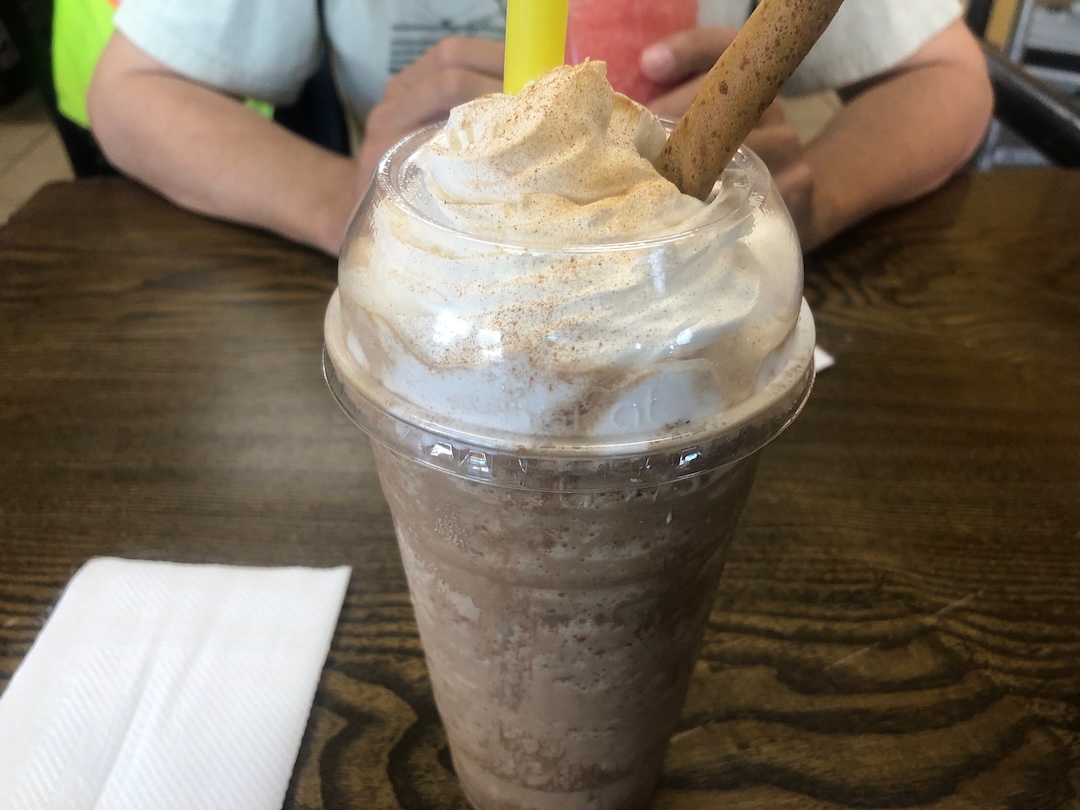
The ice blended cappuccino at Placita Cafe in L.A. (Pic: Liz O.)
The ice blended cappuccino at Placita Cafe is the best brainfreeze-inducing drink I have ever sipped. It’s a caffeinated dessert, with a rolled wafer cookie popping out of the mountain of cinnamon-dusted whipped cream that tops it. Crucially, it’s properly blended, so you get the appropriate balance of textures and flavors all the way down to the bottom of the plastic cup.
I’ve tried a lot of ice blendeds, including the made-for-the-algorithm variety that influencers and self-proclaimed foodies seem to love. What I’ve learned, though, is that the prettier an ice blended is, the worse it tastes. In fact, a few of those more photogenic ice blendeds have given me COVID anosmia flashbacks. Why is this so blah? I’ve wondered before realizing that all the flavor was in the first slurp, y’know, the one that influencers take as they mug for the camera, right before they push the drink aside and reach for the next freebie. With the Placita Cafe ice blended, though, the cinnamon hits my nose before I put the straw up to my mouth. In each sip, I feel the icy, creamy and liquid textures intermingle and taste the milk and espresso base.
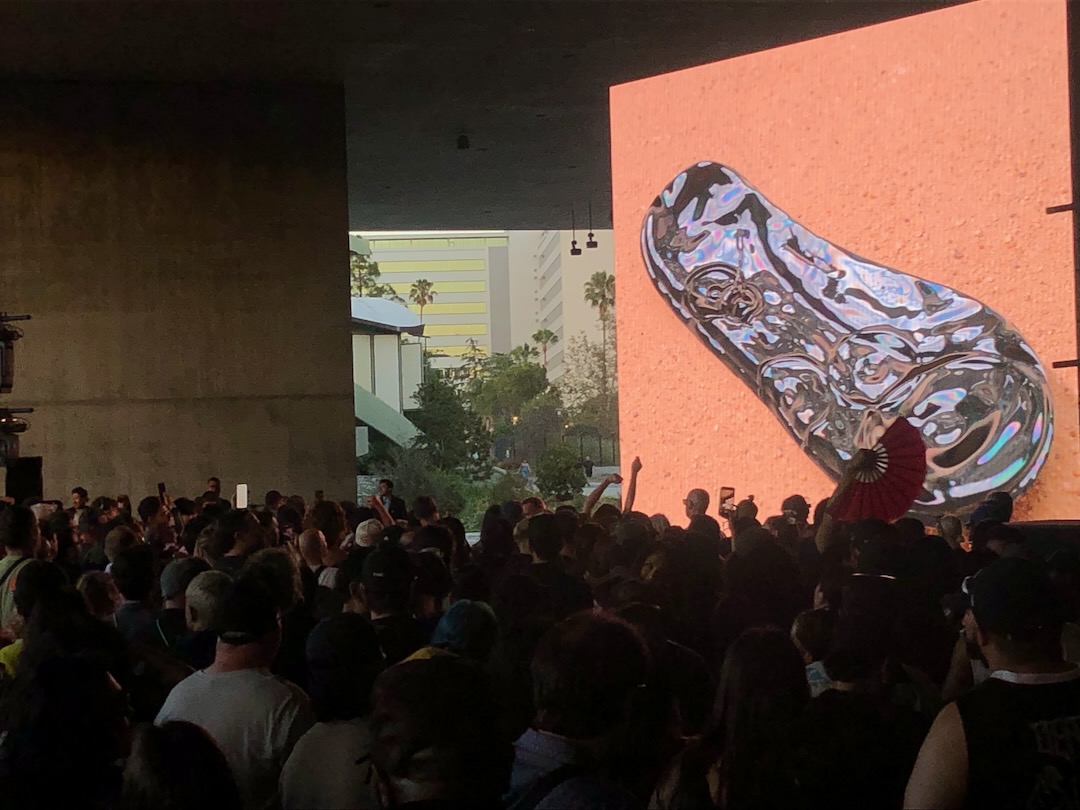
Spirits Summer Solstice Dance at LACMA (Pic: Liz O.)
The colors flashing across a screen in LACMA’s courtyard were hypnotic and unsettling. A pink Croc morphed into a glossy shade of black. Other sandals shifted between liquid shades of iridescent blue, lavender and bronze, as if vintage Urban Decay bottles had spilled across the art, leaving globs of Oil Slick, Smog and Asphyxia nail polish to ripple across the screen. So prismatic! So toxic! I couldn’t turn away.
Spirits is a series of digital sculptures mades by the Irish artist john gerrard using photoscans of 96 plastic sandals that he collected along beaches across the globe and a gaussian splatting technique that allows viewers to stream the images onto their devices and alter them with the touch of a finger. Batches of Spirits have been dropped via LACMA’s website since last December, their release dates coinciding solstices and equinoxes. The third installment of Spirits, all tied to the Mediterranean Sea, was unveiled on June 22, with an in-person component, the Spirits Summer Solstice Dance, headlined by Richie Hawtin.
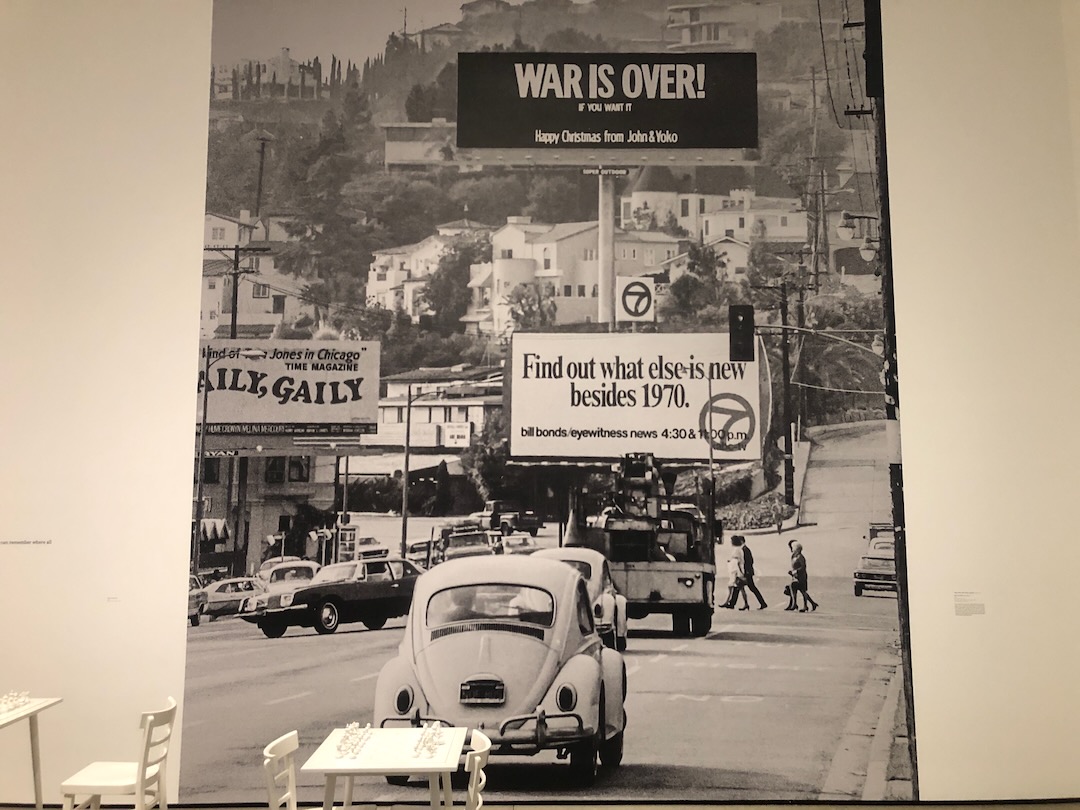
Inside Yoko Ono: Music of the Mind at The Broad (Pic: Liz O.)
Right before the press preview for Yoko Ono: Music of the Mindbegan, we were invited to add wishes to one of the olive trees in the plaza outside the entrance to The Broad. I picked up a small white tag and a pen and wrote a single world. Peace. Simple and inoffensive, I thought. Or, maybe not. Peace is complicated according to the politicians who say we need to bomb our way to it. And peace is offensive according to the people who get completely bent out of shape when you suggest that our tax money might be more wisely spent on— IDK— education and health care instead of constant war. But, I know for a fact that I wasn’t the first person who tied a hope for peace onto the Wish Trees for Los Angeles installation and it’s safe to assume that many more will do the same before the exhibition ends in October.
Yoko Ono: Music of the Mind, which began its tour at London’s Tate Modern two years ago, is a career retrospective of the avant-garde artist that takes visitors from the mid-20th century to the fairly recent past. The exhibition’s stop at The Broad marks Ono’s first ever museum solo show in Southern California, so it is a landmark event and one that shouldn’t be missed.
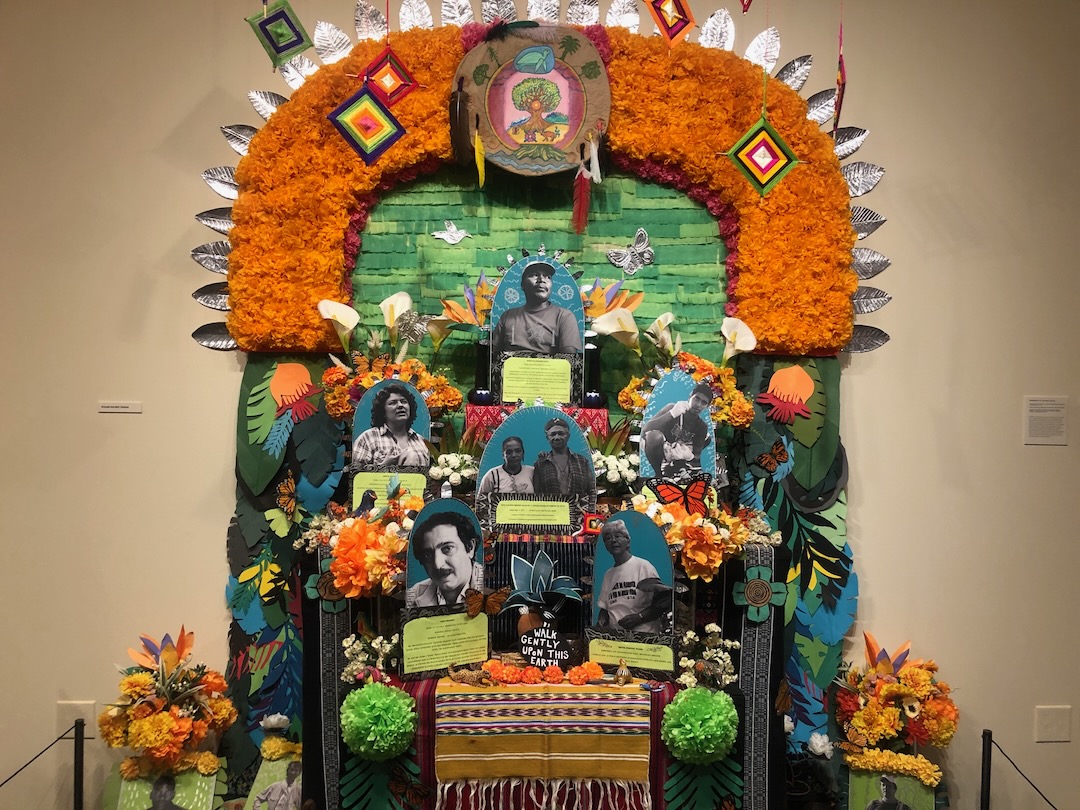
Defenders of Mother Earth altar by Ofelia Esparza at Vincent Price Art Museum (Pic: Liz O.)
I’ve been on a museum kick lately. Museums are the antidote to the slop that poisons our daily lives. These institutions present art and history with the information and context necessary to understand what we see and hear. They’re curated – the actual definition of the word, not the watered-down marketing department version of it – by people who have done real research to present the materials in the most accurate way possible. I can trust what I see in a museum and that’s comforting when I can’t get through a single scroll without asking truly absurd questions like, “Is that Golden Trump for real?”
My favorite thing about museums, though, is that the exhibitions are designed to be seen in person. You can take as many photos as you want, but none of them are going to do justice to the art or exhibits. That’s why, instead of my regular recommendations this week, I wanted to encourage people to go out and see what is in your local museums. If you’re reading this in Los Angeles, which I am assuming you are, then I have two specific institutions to shout out. Both are in locations that are easy to visit whether you have a car or use public transit and admission for both is free.
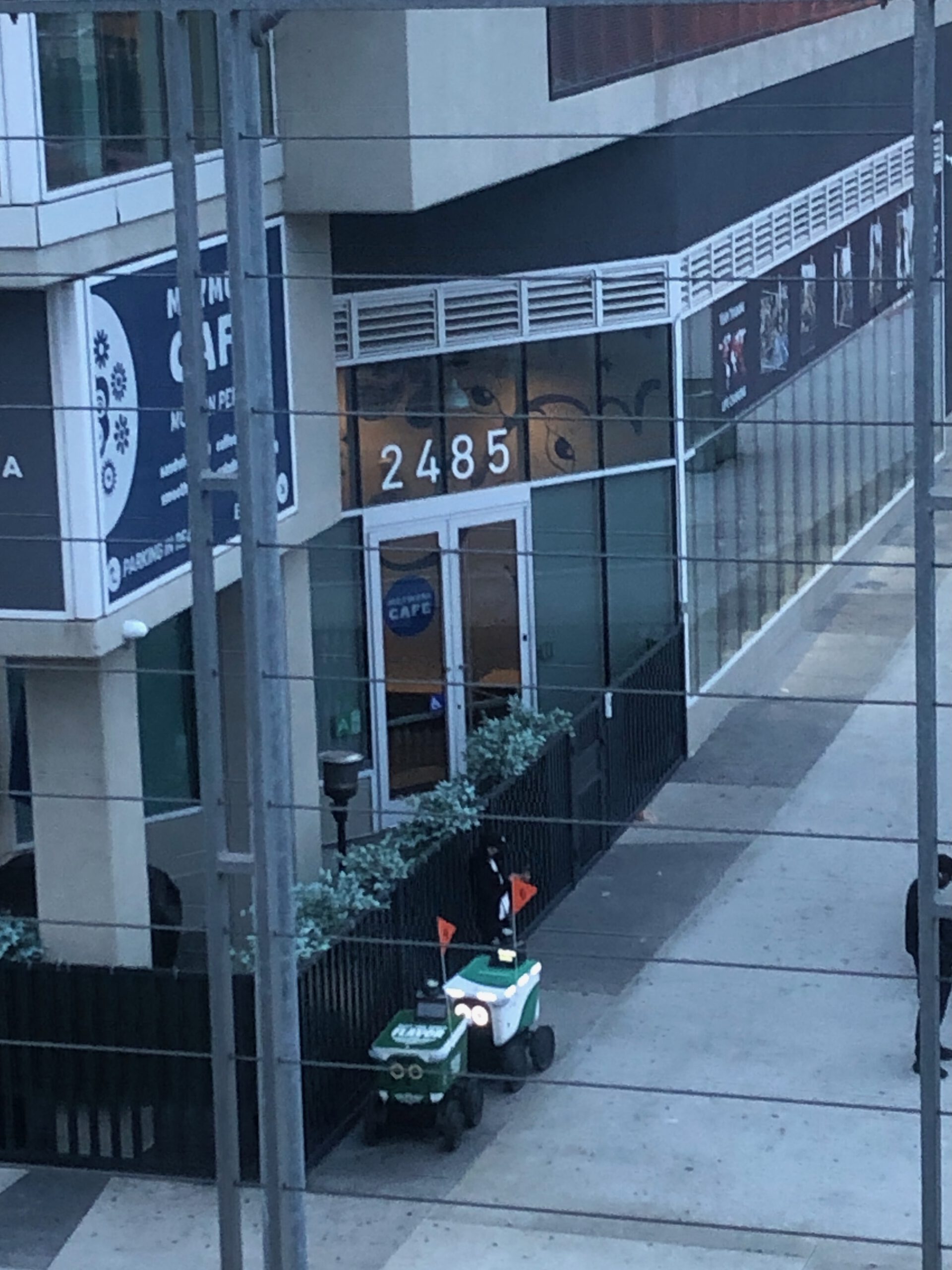
Westside delivery bots spotted from the E Line platform (Pic: Liz O.)
“I can’t really hate the robots,” I say to my husband, about a half-mile or so into a walk up Sawtelle. We’ve passed a smattering of delivery bots already. The one in front of me is a green, doe-eyed model named Noor. “When I see them, I think of Wall-E.”
Almost immediately, déjà vu hit. Did we have this conversation before somewhere closer to home? Maybe near 7th Street, where downtown’s IRL bot armies tend to congregate? “I know I’m being emotionally manipulated,” I add. I’m anthropomorphizing the tech that’s contributing humanity’s demise. Or, something like that. I can’t bring myself to hate the robots, but they are definitely harbingers of doom.