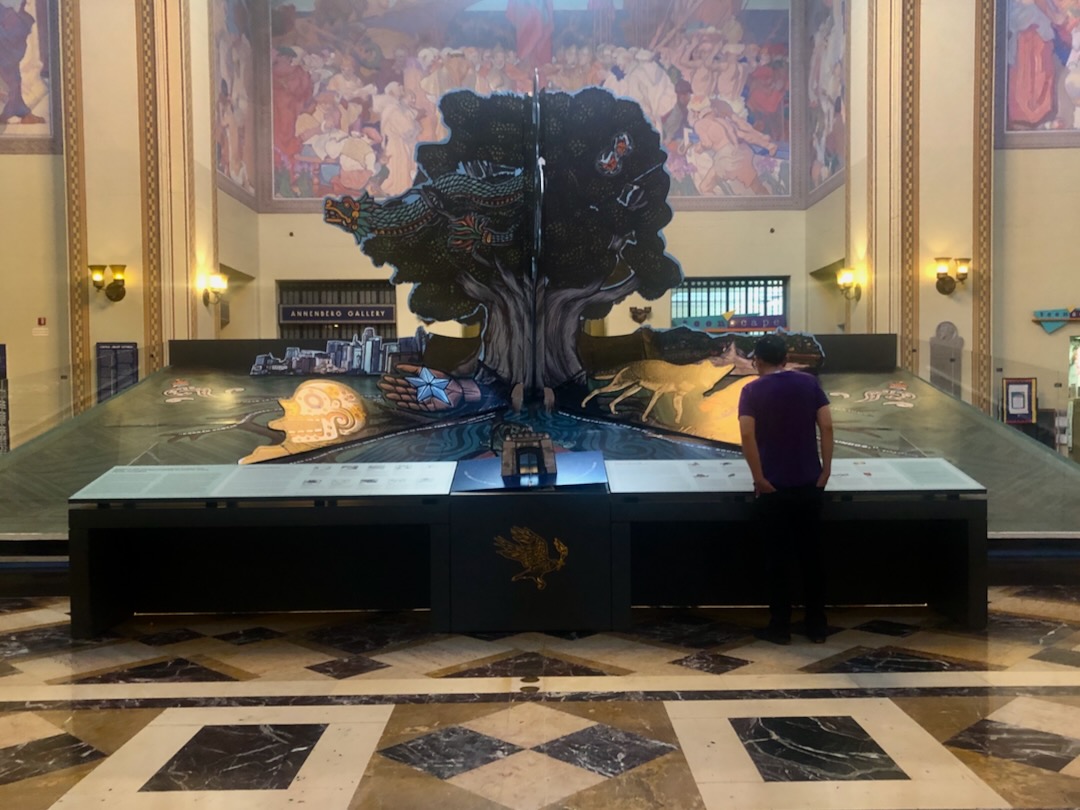
“I’m going to show you something cool,” I say to my husband while leading him to the back of a room on the bottom level of Central Library. “And, by cool, I mean super dorky.”
I love browsing through old stuff. It’s not a nostalgia thing. I don’t long for the past. I just like to make connections between what was and what is. It’s how my DJ brain works. Like, a significant moment in my evolution as a music nerd came in my late teens, when I stopped thinking of ‘60s soul as my parents’ music and realized it was the basis for most of what I liked. Every song builds on what came before it. DJing is just figuring out how it all fits together.
Movies are similar. The other night I just happened to catch I Want to Live! on TCM. Susan Hayward plays a woman found guilty of murder and sentenced to death in the 1950s. It’s a terrific movie – Hayward won an Oscar for her performance – and, in the midst of it, I thought, OMG, this is Female Trouble! Divine as Dawn Davenport was totally channeling Susan Hayward as Barbara Graham!
This is cultural literacy, something that’s lost when you’re served media via a corporation’s algorithm. You think you’re learning something because your feed is overloaded with variations of the same “How New Order Made ‘Blue Monday’” video, but you aren’t. You’re just parroting AI-generated summaries of Wikipedia entries. If you want to be really culturally literate, you need to get out into the world and figure things out for yourself. That’s why I love thrift stores and record shops, museums and libraries. Particularly, I love Central Library.
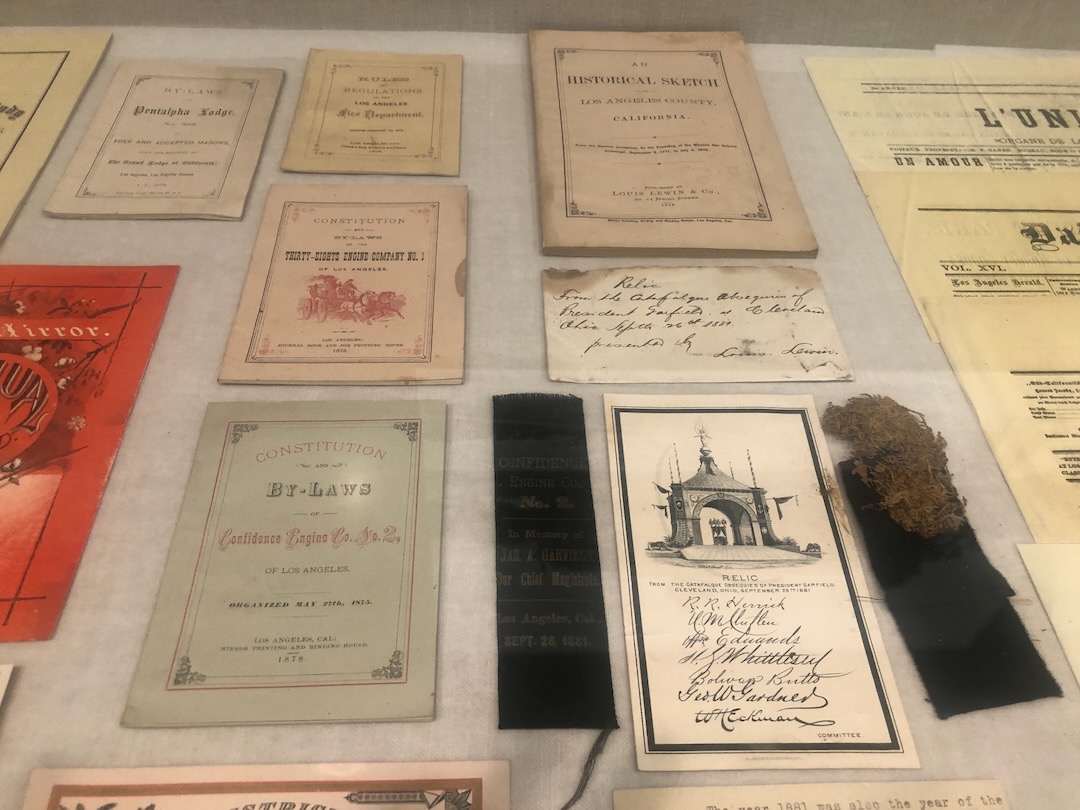
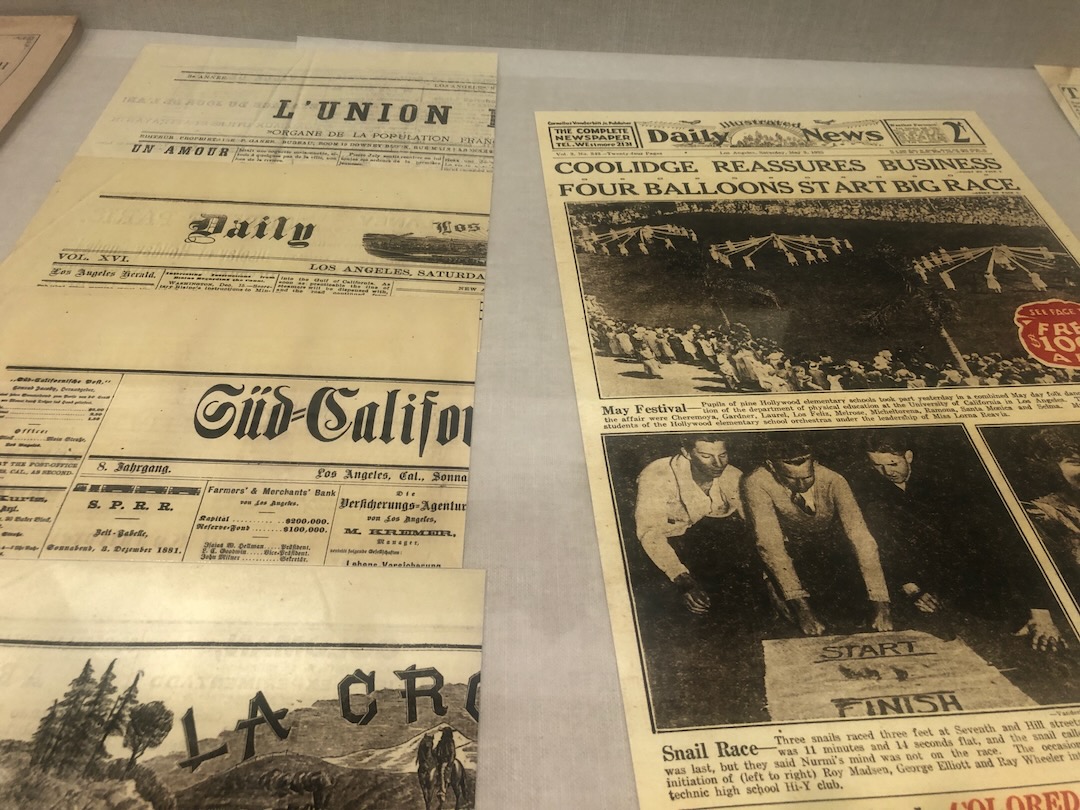
The Richard J. Riordan Central Library, which celebrates its centennial this year, is the downtown hub of the Los Angeles Public Library, a sprawling system that includes 72 branches within the city limits. It’s really two buildings fused into one history that, in a way, reflects the story of downtown. The original Goodhue Building is a multicultural take on Art Deco-meets-Beaux-Arts. It’s a unique design, but one that makes sense with what remains of early 20th century downtown. Inside, it’s resplendent with art and architectural details that make it feel like a cathedral for books. The Tom Bradley Wing, which opened in 1993, is a modern space filled with light and brightly colored public art that is a bit more reflective of the high-rise Bunker Hill of the late 20th century, but also fits seamlessly with the 1926 building. Central Library’s website has lots of info on the architecture, but you’ll learn more if you go there now and check out the centennial exhibition in the gallery spaces and mezzanine areas. And, if you really want to dig into the history of the building, read Susan Orlean’s fantastic The Library Book.
I maneuver through the library aisles, past the maps and the magazines and towards a few rows of hefty, nearly identical reference books. “Look,” I say, “they have phone books here going back, like, 100 years.”
Weird, I know, but old phone books hold a wealth of information that you can’t just dig up via computer. Chat can barely handle accurate information about what’s happening right now, do you think it’s going to give you the right location for a business that closed in 1935? And someone, somewhere might need that information someday. Also, it’s just fun to look through old phone books. I grab a Cleveland, Ohio Yellow Pages from 1955. “I wonder if my grandparents are in here,” I say, before remembering that Yellow Pages are just for businesses.
My first trip to Central Library was back in high school. I had been making zines with my friends, which caught the attention of someone who was publishing a much larger, teen feminist zine and asked me to write about the Miss America protest of 1968. This being the technological stone age of the 1990s, I walked to the local branch library that I had been visiting since I learned to read. I searched their computer database and quickly found out that the articles I needed were only available on microfilm or microfiche or whatever at Central Library. What?! I was a teenager from the Valley. I barely knew how to get past Universal Studios on my own. How was I going to get downtown?
“Come to work with me and I’ll take you to the library,” my dad said. So, I did. That day wasn’t just my first trip to Central Library, it was the first time I rode a subway and, because we made a pit stop to visit my aunt at her work, it was also the first time I was in a high-rise, on a floor that swayed with the wind no less. Really, this was the first time that I felt dwarfed by the city surrounding me and I loved it. I was instantly impressed with Central Library. It was so grand, so unlike anything that I associated with my hometown at that point in my life. I would come back often over the years and, eventually, I moved close enough for it to become my go-to library, even though I technically live closer to multiple branch libraries.
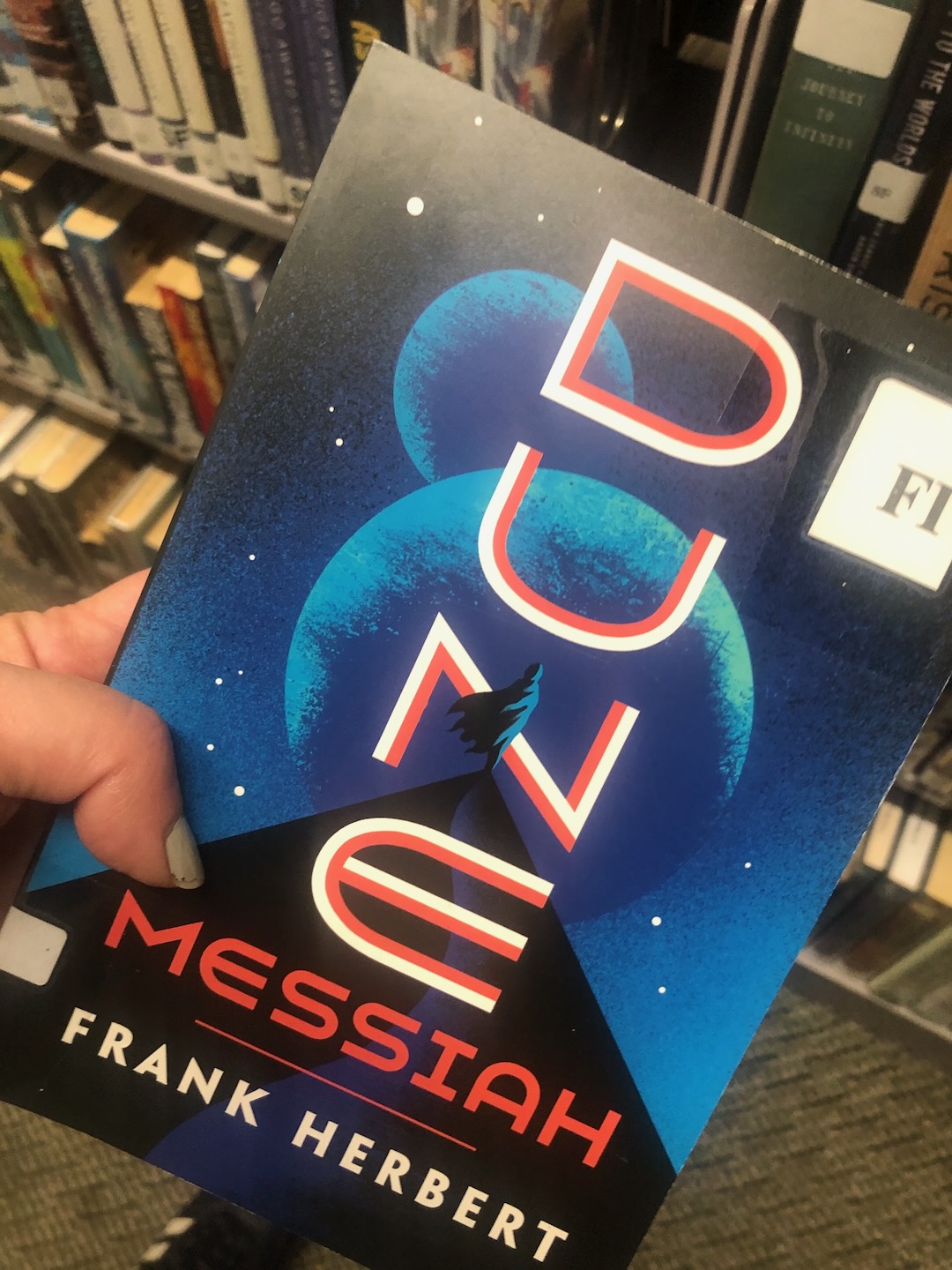
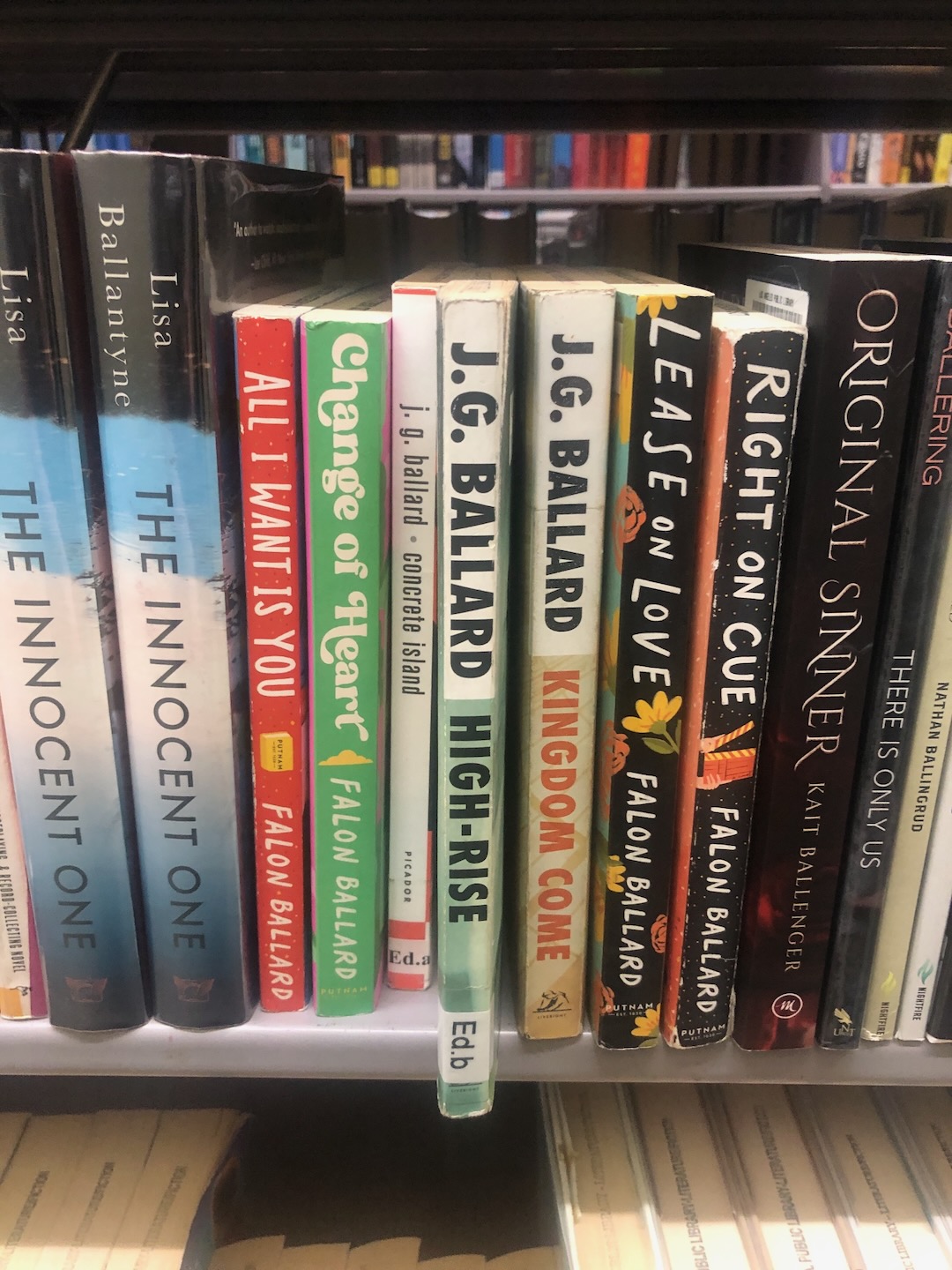
By the time we got to the phone books, we had already gotten lost in the labyrinth of shelves in the Literature and Fiction Department. I picked up a copy of Dune Messiah and, with some help from a librarian, tracked down a copy of High-Rise, the J.G. Ballard book that I’ve been meaning to read because it gets referenced so often. We browsed the rows of biographies in the Art and Music Department, perused the Centennial exhibitions and visited the Rotunda, where the world’s largest pop-up book is on display.
We traveled downstairs to the Octavia Lab, the maker’s space named for the author Octavia Butler, which was packed, and peeked through the window of the bustling computer lab, before making our way to the History & Genealogy Department. This is a sorely underrated resource at the library, particularly considering how many tools they have available to use at home. Thanks to the genealogy department, I found out that, after leaving Turkey, one of my great-grandfathers lived in Quebec before heading to Ohio via New York and that his mom and I share a first name. We didn’t know any of that.
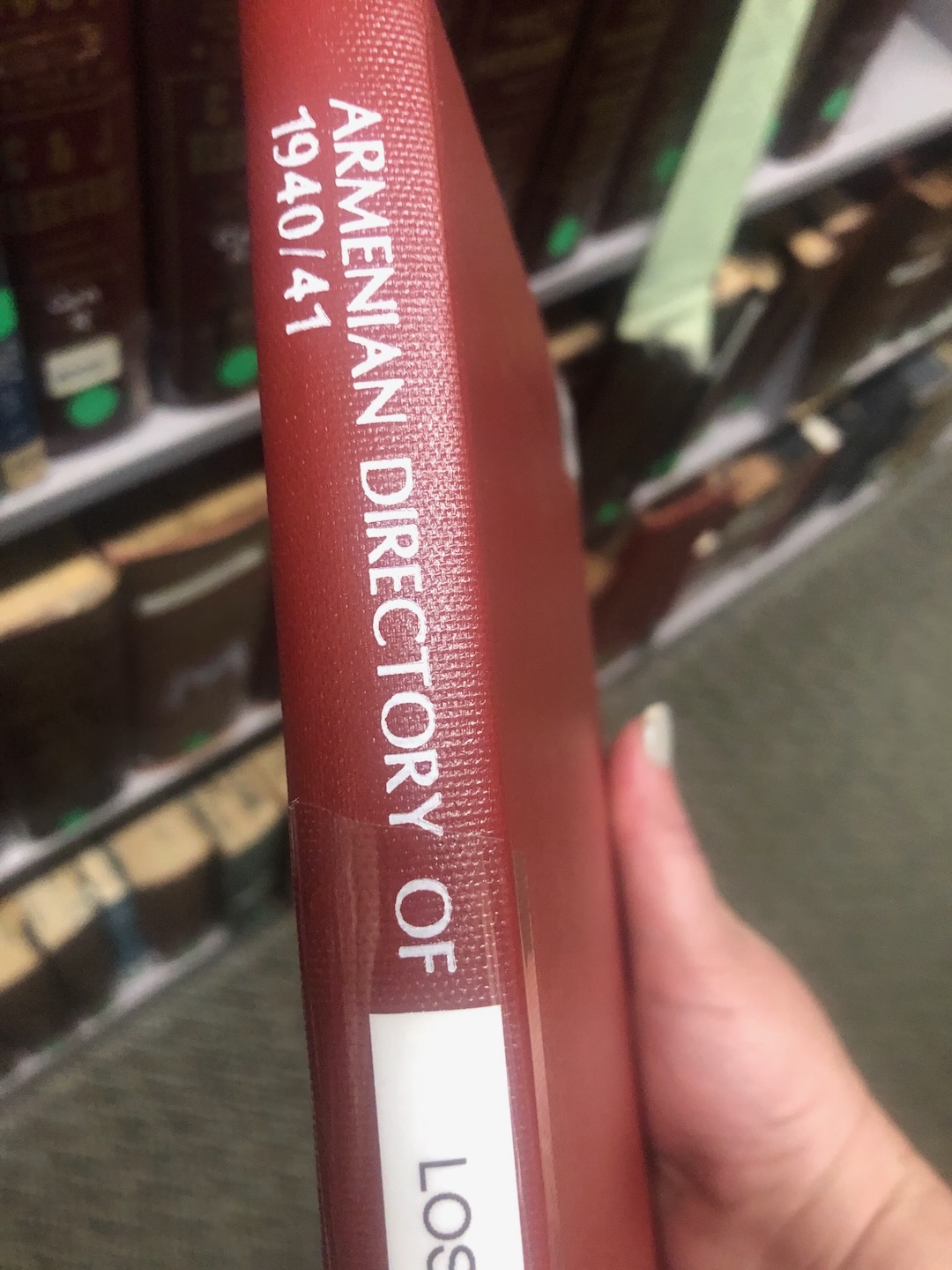
My husband pulls out a phone book that’s thinner than the others on its shelf. “Hey, Liz,” he says. I scan the book’s red spine, Armenian Directory of Los Angeles and Fresno, it reads, 1940/41. I bet that I can find the L.A. wing of my family here, and I do. Both of my great-grandfathers are in there. Then I find an ad for one’s business, a fruit crate company downtown. I’ve asked my relatives where it was how many times, but the answer is always a convoluted variation of “somewhere downtown.” I take a picture. Later on, after we’re home. I google the address on Olympic. It’s either a McDonald’s or near a McDonald’s now. Regardless, I know where it is. I’ve caught the bus right there how many times without realizing that it’s where my great-grandpa once made crates.
This is all a part of cultural literacy too, knowing where you came from, where you are and what was there before it became the McDonald’s adjacent bus stop where you catch a ride home from the Piñata District. And it’s an understanding you’re not going to get from content. To get it, you have to stop scrolling and start digging.
Liz O. is an L.A.-based writer and DJ. Follow on Instagram or sign up for the weekly, Beatique newsletter for updates on new stories and gigs.
Listen to the August 2026 edition of Beatique with music from Arctic Monkeys, Divine Comedy, Boy Harsher, horsegiirL, Turnstile and more.
More:
Lost in Time at King Richard’s Antique Center