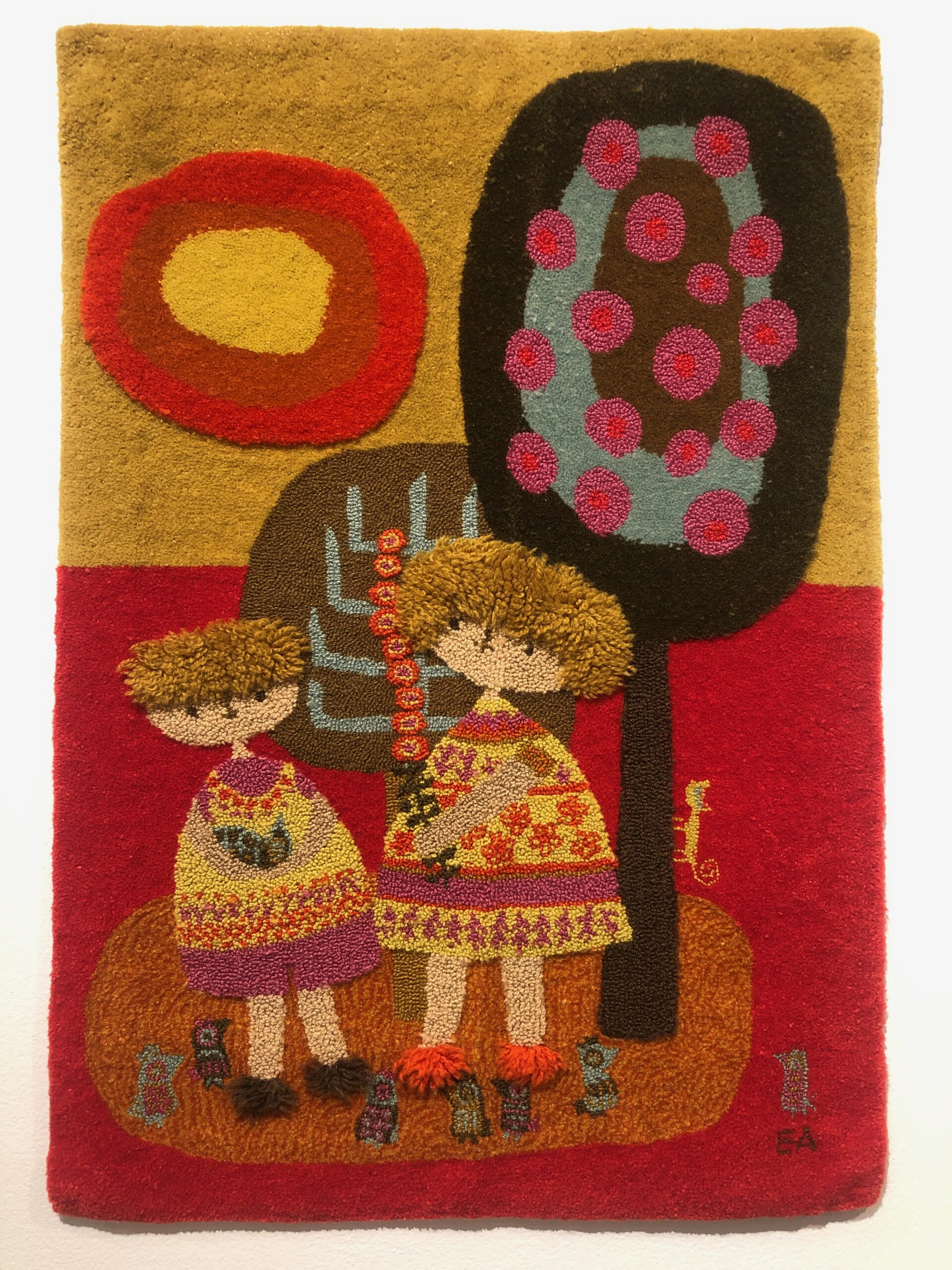
The first piece that caught my eye inside Craft Contemporary was a rug. Really, it was a wall hanging— I can’t imagine anyone allowing feet to come in contact with it— but it was handhooked with the kind of thick wool yarn that you would imagine carpeting midcentury homes. Garden, designed by Evelyn Ackerman and produced by Toyo Rug Company in Osaka, Japan back in 1962, is art you want to touch. In it, a garden scene rises from a plush, sunny background where two children with cheery faces pick flowers and play with birds. It’s charming in the way that’s similar to Mary Blair’s It’s a Small World style, but it’s also tactile. Pictures don’t do it justice and, while you can’t actually touch museum pieces, you can lean in close to see how the yarn is hooked and sheared to create dimension and add textured details like windblown hair. You should see Garden, and so many other pieces Evelyn and Jerome Ackerman, in person and you can in the exhibition Material Curiosity By Design, which opened at Craft Contemporary in November and runs through May 10.

Evelyn and Jerome Ackerman were artists who met and married in Michigan and moved to Los Angeles in the early 1950s, where they founded Jenev Design Studio and, later, ERA Industries. They made home decor items, everything from carved wood paneling to door pulls to tapestries, working with artisans based everywhere from Torrance to Florence to bring them to the consumer market. In the process, the Ackermans became associated with the California design movement of the mid 20th century. In that era, they showed in major exhibitions like California Design at the Pasadena Art Museum (we know it today at the Norton Simon) and, as you walk through the Craft Contemporary exhibit, you can imagine these works of art adorning houses from L.A. to Palm Springs. The Ackermans also outlasted the modernism era in a career that endured for more than half a century with some of their most popular designs, like a zodiac-inspired series, remaining in production for decades.
Material Curiosity By Design shows a broad expanse of the Ackermans’ work alongside pieces from contemporary artists Porfirio Gutiérrez, Jolie Ngo and Vince Skelly. I’m focusing solely on the Ackermans’ pieces here, though, because it’s mostly from the 1950s through 1970s and that made me think a lot about the modern era vs. today’s blah era.
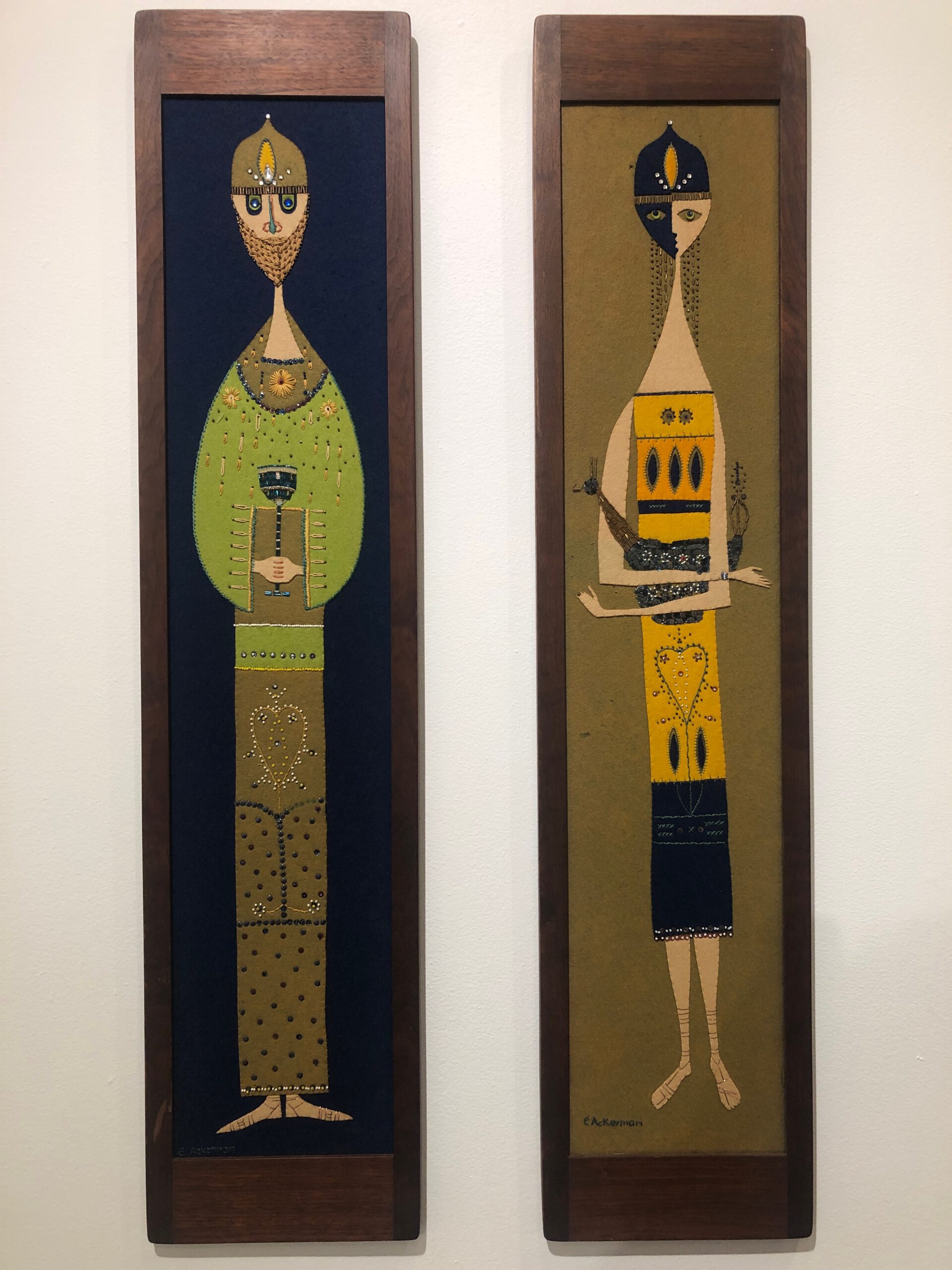
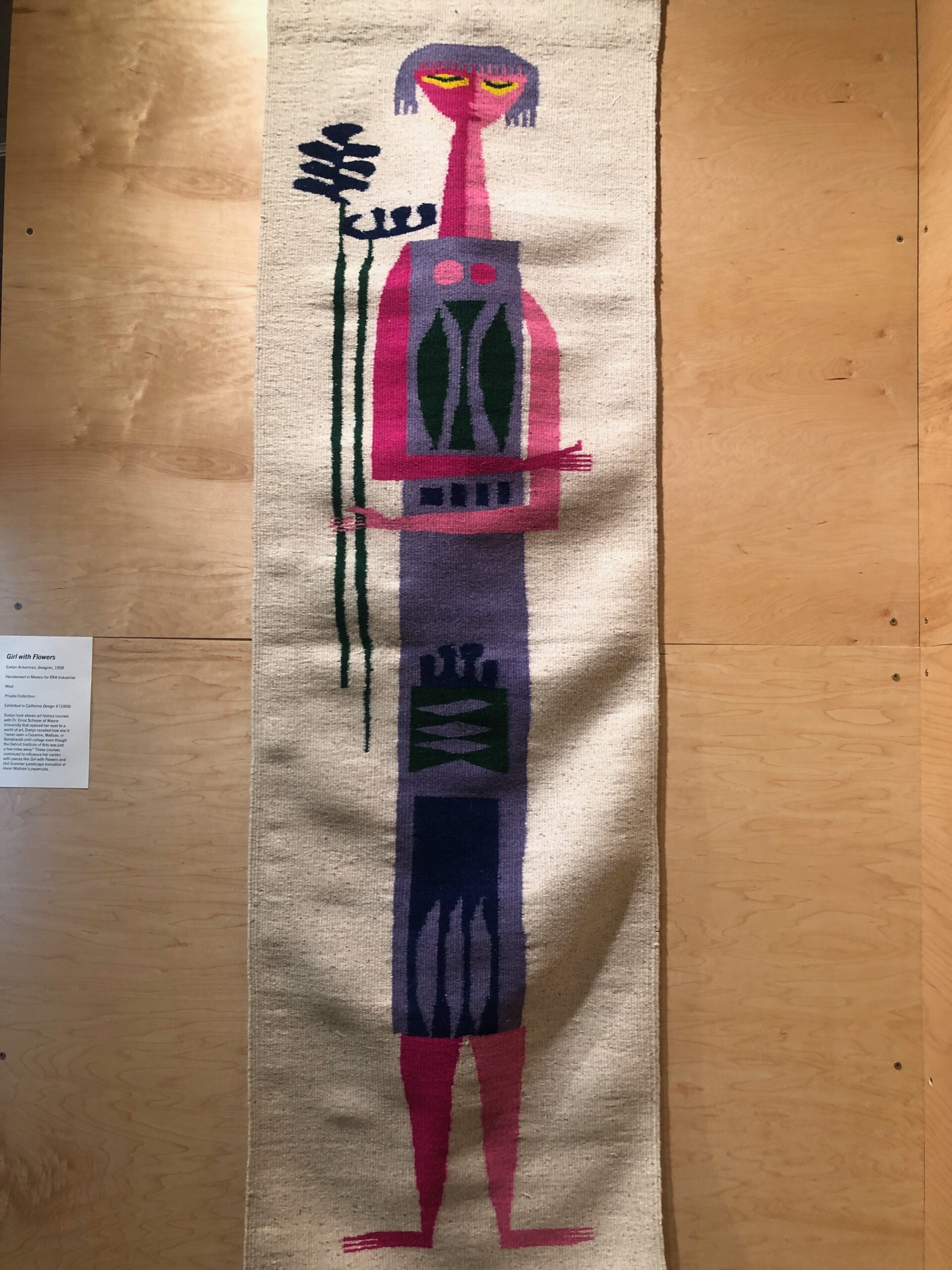
If you search midcentury modern now, you’ll probably see lots of boring interiors filled with neutral colors and little-to-no embellishments. That’s so common online that it’s actually part of Google’s AI summary of midcentury modern. Now, if you’ve spent a lot of time vintage shopping, or visiting elder relatives, you know that’s not really the midcentury vibe. And if you walk through Material Curiosity By Design, you know that’s absolutely not the midcentury vibe. The Ackermans used a lot of color. Tapestries are loaded with them, some in hot shades of yellow and orange, others in rich pinks, blues and purples. They made mosaics that glisten and wood carvings filled with detail. Evelyn Ackerman learned how to work with cloisonné enamel, packing so much color and detail into tiny tiles. Nothing here is made to fade into the background. It’s made to pull you in and look closely.

Also worth noting is that the Ackermans’ work has strong ties to the past. For example, there are two embroidered felt pieces by Evelyn, Medieval King and Medieval Queen, that reflect medieval art. That the couple worked in traditional disciplines that show the work of human hands, whether their own or those of their artisan collaborators, is important too. That might be the most important takeaway in our tech-dominated world, but it’s not exclusive to Material Curiosity By Design or even Craft Contemporary. In fact, now that AI is being shoved down our throats and online platforms are overloaded with slop, it’s more important than ever for us to visit our local museums as often as possible. See art in person. Look at it from multiple angles. Read the show cards. Study it, even (maybe, especially) if you aren’t an artist just as a reminder of what humans can do.
Liz O. is an L.A.-based writer and DJ. Follow on Instagram or sign up for the weekly, Beatique newsletter for updates on new stories and gigs.
Listen to the January, 2026 Beatique Mix.
Keep Reading:
Lost in Time at King Richard’s Antique Center