Right before the press preview for Yoko Ono: Music of the Mind began, we were invited to add wishes to one of the olive trees in the plaza outside the entrance to The Broad. I picked up a small white tag and a pen and wrote a single world. Peace. Simple and inoffensive, I thought. Or, maybe not. Peace is complicated according to the politicians who say we need to bomb our way to it. And peace is offensive according to the people who get completely bent out of shape when you suggest that our tax money might be more wisely spent on— IDK— education and health care instead of constant war. But, I know for a fact that I wasn’t the first person who tied a hope for peace onto the Wish Trees for Los Angeles installation and it’s safe to assume that many more will do the same before the exhibition ends in October.
Yoko Ono: Music of the Mind, which began its tour at London’s Tate Modern two years ago, is a career retrospective of the avant-garde artist that takes visitors from the mid-20th century to the fairly recent past. The exhibition’s stop at The Broad marks Ono’s first ever museum solo show in Southern California, so it is a landmark event and one that shouldn’t be missed.
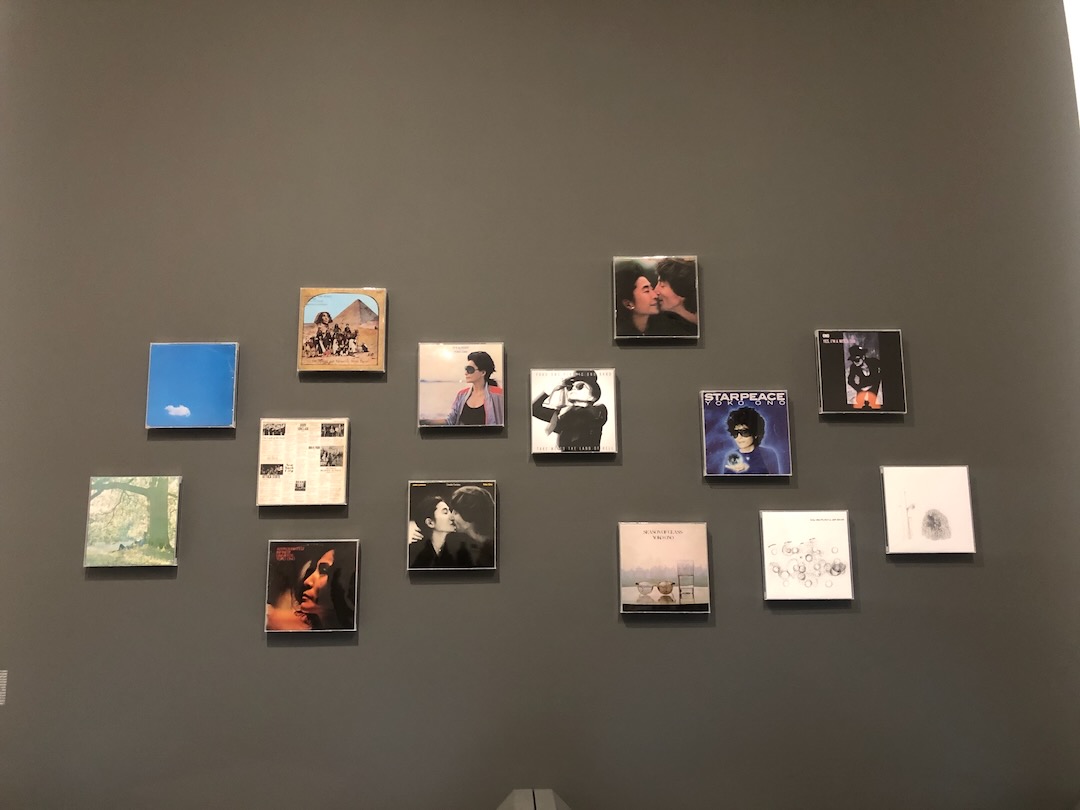
For the completely uninitiated, Ono is a multidisciplinary artist who has been active since the 1950s. She was raised primarily in Japan, her childhood coinciding with World War II. After attending Sarah Lawrence, she settled into New York City’s art vanguard. In the 1960s, Ono linked up with the Fluxus art movement and released work that would go on to become influential, like the book Grapefruit and the performance Cut Piece. Then, at the end of the decade, she married John Lennon, who was still in The Beatles and arguably one of the world’s biggest rock stars of the time. Ono and Lennon collaborated with each other extensively on music and art until his death in 1980. In fact, on the day Lennon was murdered, the two had just finished recording “Walking on Thin Ice,” which would become a massive dance floor hit for multiple generations of club kids. In the ensuing decades, Ono continued to make music and art. She’s known for large-scale projects like the Wish Tree series and the Imagine Peace Tower in Iceland. Now 93, Ono has spent the past handful of years out of the spotlight, but her work is frequently reassessed and dissected as more people realize that she’s always been far ahead of her time. One way in which she is still on the cutting edge is in her commitment to peace.
Music of the Mind covers the breadth of Ono’s work, so you’ll see instructions that appeared in Grapefruit, alongside films, including Film No. 4 (Bottoms), participatory works like Bag Piece and the installation Helmets (Pieces of the Sky), plus a listening station with her music. This is a fairly large exhibition and much of the art demands that viewers spend some time with it. If you go, plan to spend a few hours at The Broad.
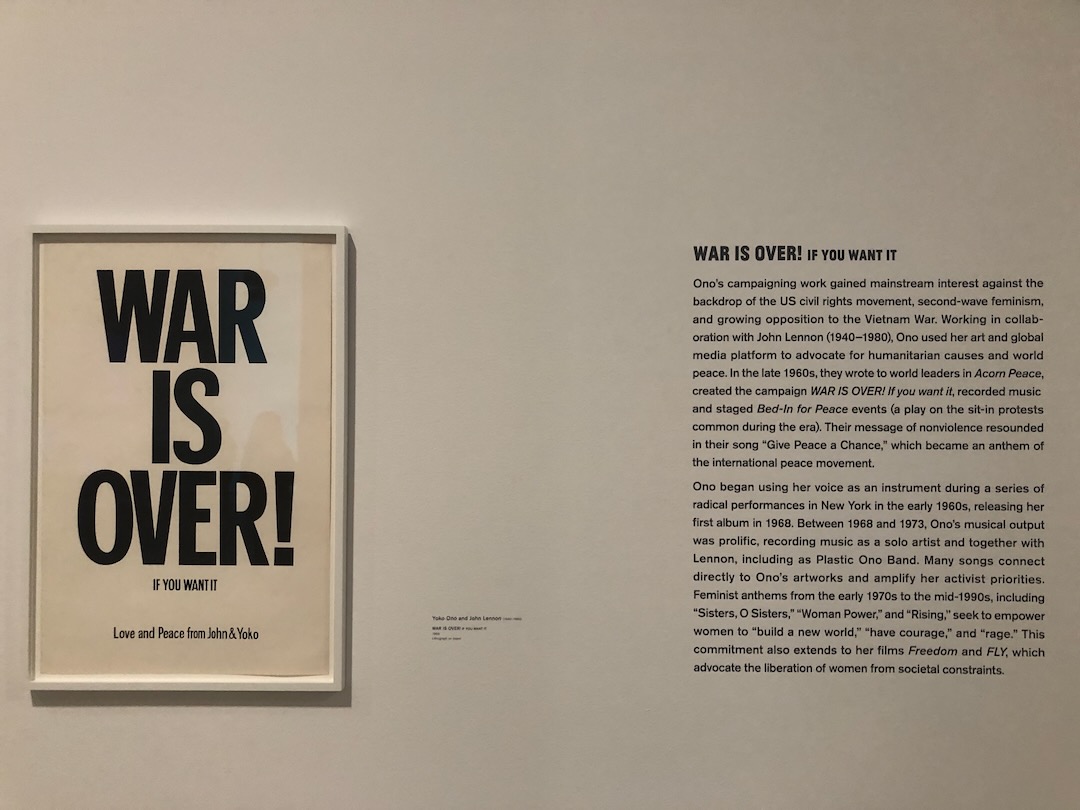
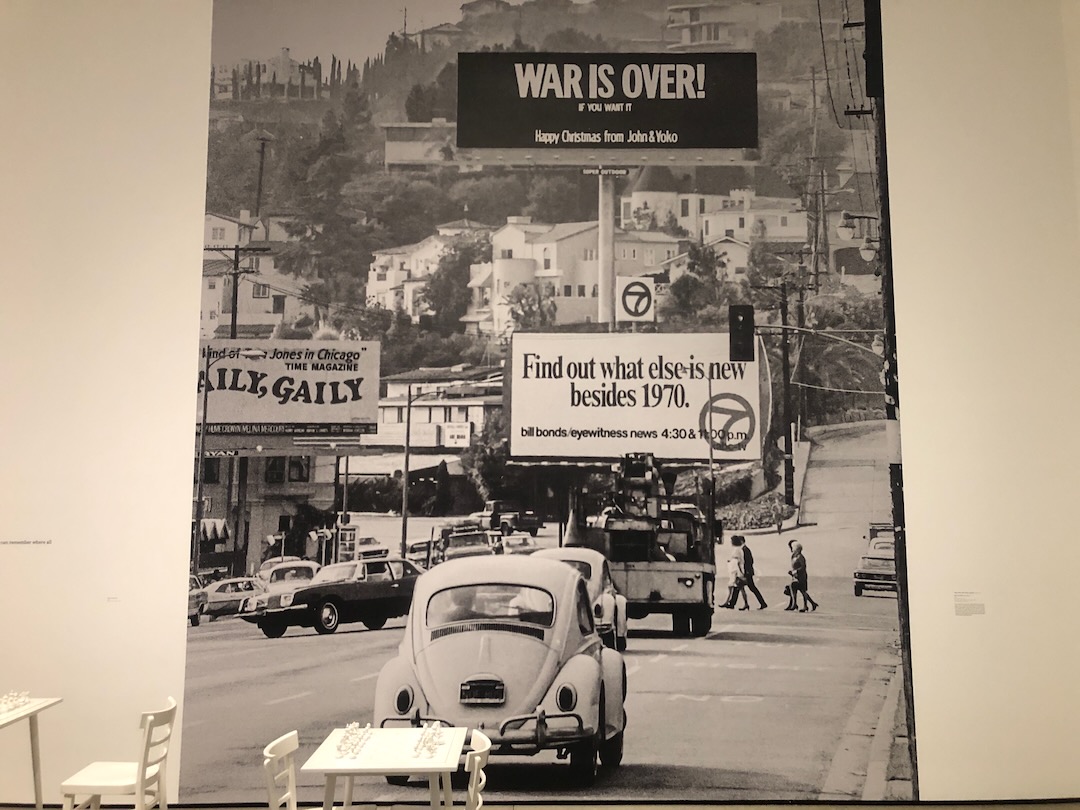
While I definitely need to see Music of the Mind again, my first impressions were about how deeply connected Ono’s art is to her peace activism. They’re really one in the same. Even though Ono is known as a peace advocate, I think the assumption is that this is mostly manifests in her work with and about John Lennon, like War Is Over! If You Want It, the campaign they created shortly after marrying, and Imagine Peace Tower, which she conceived in his memory. “War is over” and “Imagine peace” are more than slogans, though. These are themes permeate so much of Ono’s work in ways that aren’t always obvious.
There’s a tendency in the U.S. to view pacifism as a hippy-dippy relic of the Vietnam War era. Violence is just supposed to be a normal part of our lives, so we immediately forget the mass shooting that was breaking news an hour earlier and continue voting for politicians who will always choose to feed the war machine over feeding American children. We’re so numb to violence at this point that we might miss the point when an artist asks us repeatedly to consider other choices, which is what Ono has been doing for well over half a century.
I recently read an article in the New York Times about Yoko Ono’s feminism, specifically about her Cut Piece performances from the 1960s. The story was interesting, but overlooked how important peace is to feminism, an omission that, TBH, is 100% on brand for the paper of record. You can see Cut Piece, which is part Music of the Mind, as a play on words. In it, the audience uses scissors to cut away pieces of Ono’s outfit. So, the viewers are asked to consider how they will respond. The same goes for Ono’s reaction. On either side of the shears, the question is, do you respond with nonviolence or do you attack? Will you choose peace?
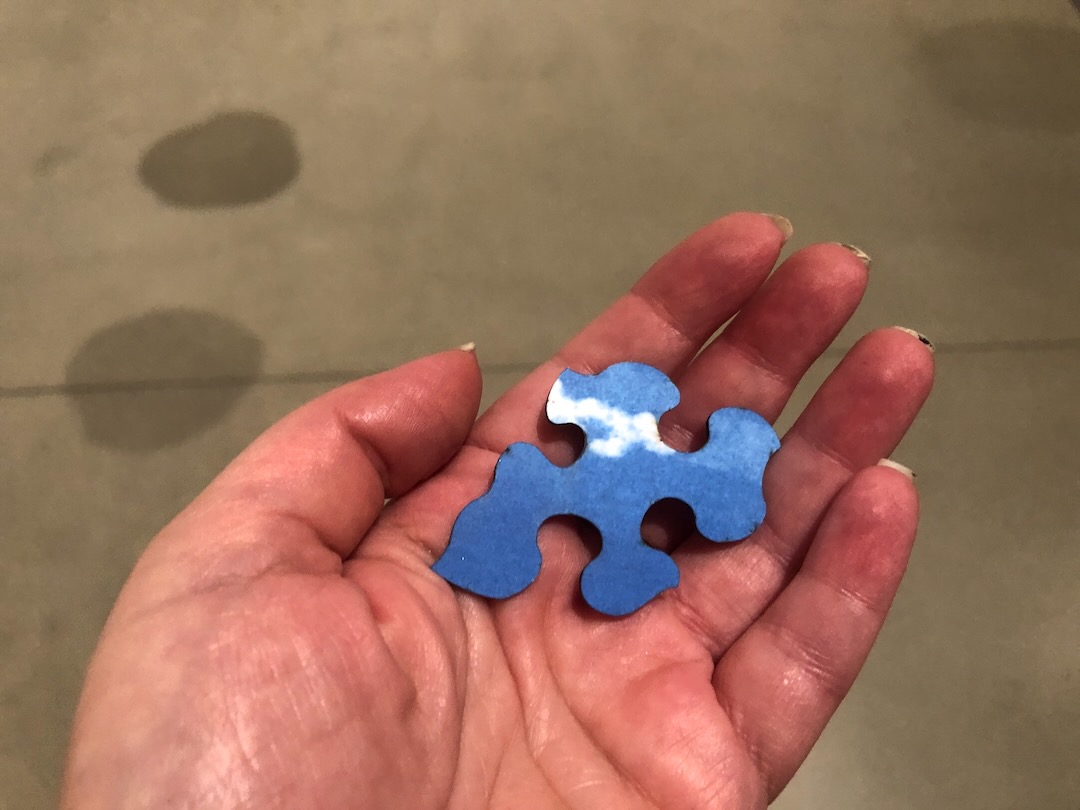
That prompt to consider your actions runs through the participatory installations. In Bag Piece, you take off your shoes and climb into a large black fabric bag. No one can see you while draped under the cloth, but you can see everything fairly well. While you’re in the bag, you’ll need to consider how you will act when granted such anonymity. Later, when you reach Helmets will you just take one piece of the sky puzzle from the installation, or do you start making a mess? Ono puts a lot of trust in the viewers, maybe humanity in general, to do the right thing. And maybe she’s on to something.
In Add Color (Refugee Boat), visitors are asked to draw or write messages on blank walls and a small, white boat in the center of the space. Since I was there shortly before the exhibition technically opened to the public, only a handful of folks had left their marks. Amongst the doodles and scribbles, someone wrote “love the world to peace” on the boat. On a wall, someone else left the message, “Think peace, act peace.”
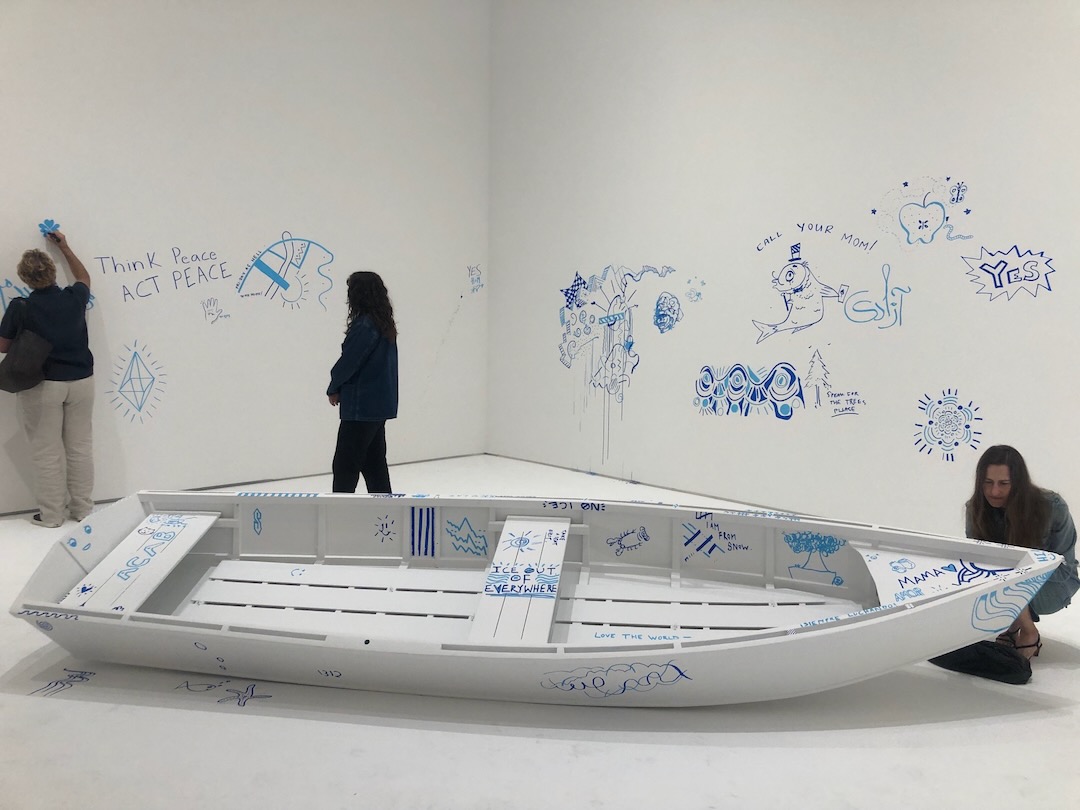
One of Ono’s best known quotes is “A dream you dream alone is only a dream. A dream you dream together is reality.” At least at the press preview, you could see that sentiment in action. I don’t know if the general public will react in the same way or even if people unfamiliar with her work will see Music for the Mind. I do hope, though, that people will check out the show whether or not they know anything about Ono because her message of peace is is an important one and it’s all over this show.
Liz O. is an L.A.-based writer and DJ. Follow on Instagram or sign up for the weekly, Beatique newsletter for updates on new stories and gigs.
Listen to the May 2026 edition of Beatique, featuring music from Sextile, Fcukers, Kneecap, Dry Cleaning, Fontaines D.C. and more.
Keep Reading:
Depeche Mode, Fontaines D.C. and War Child: The Wars Change, But the Protest Songs Remain the Same
Best of 2025: The Year in Political Songs
David J Sings of History Repeating in New Protest Single, “ICE Too Cold to Thaw”