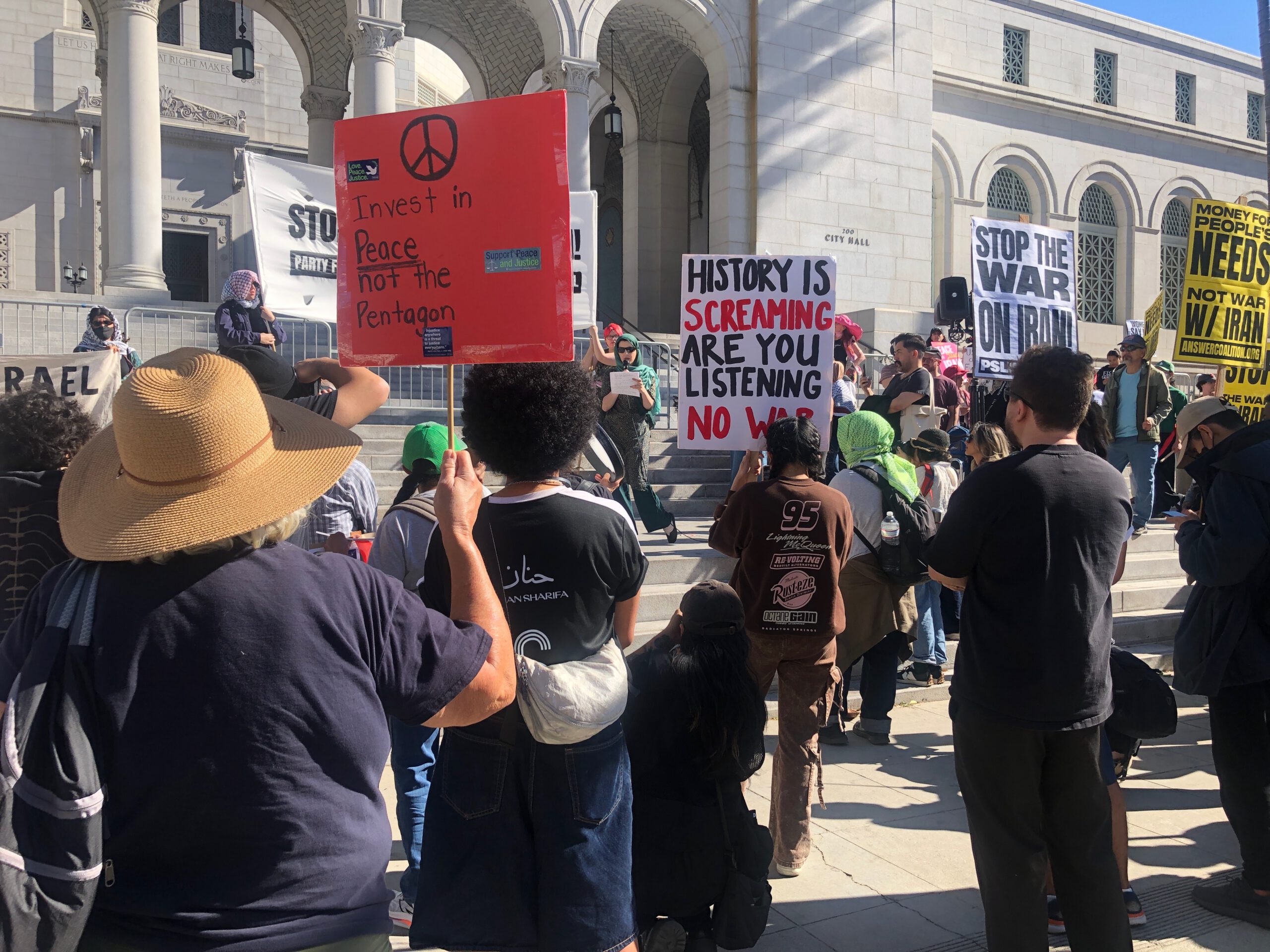
As the Santa Ana winds whipped through Los Angeles, downtown protestors clung to signs that read, “Invest in peace not the Pentagon” and “War crimes don’t hide sex crimes.” A string of activists spoke on the steps of City Hall. They led us in a run of chants all of which could be summarized in one point: end the wars.
Before walking to the Saturday afternoon protest, I listened toHelp (2), the War Child compilation album that came out on Friday, for the second or third time. On it, Depeche Mode covers “Universal Soldier,” written by Buffy Sainte-Marie in the early 1960s. It’s a striking condemnation of war made all the more ominous when performed as a dark, synthpop song. Listen closely and you might swear you hear jets in the background. Even if you’re only playing the song in the background, you can’t miss the resignation in Dave Gahan’s voice when he delivers the closing line, “this is not the way we put the end to war.”
“Universal Soldier” is a Vietnam War-era folk song that’s been covered many times, and in multiple languages, over the year. It’s easy to understand why the lyrics remain relevant as battlegrounds change. This cycle of war endless. “I feel like I’m living in a loop,” I mention to a friend who I ran into at Saturday’s protest.
The crowd at City Hall spilled out into the middle of Spring Street. It would not surprise me if some of the protestors have been marching since the 1960s. Some looked to be around my own age, i.e. people who were young adults at the start of wars in Afghanistan and Iraq. A good chunk of the crowd appeared much younger. College kids. Probably some high schoolers. People whose future rides on what happens in this moment. Then I notice the youngest of the protesters and wondered if, a decade or so from now, these children will enter their adulthood with yet another war looming in the background.
It’s important to mention that this protest, like the others that I’ve attended this year, was intergenerational. Online platforms like to silo people into generations— marketing demographics, basically— and if all you know is what the platforms and their advertisers want you to see, that will skew your perception of who gives a shit about what’s happening right now.
Similarly, War Child is an intergenerational compilation. Depeche Mode is on it alongside ‘90s Britpop idols Pulp, Damon Albarn (Blur, Gorillaz) and Graham Coxon (Blur). There are also names that the ‘00s indieheads know, like Arctic Monkeys and Bat for Lashes, and newer stars, including Fontaines D.C., Wet Leg, Cameron Winter from Geese and Olivia Rodrigo. It’s all produced by James Ford, who is half of Simian Mobile Disco and the producer with credits on a ridiculous amount of cool albums, like Fontaines D.C. Romance and, most recently, Gorillaz The Mountain.
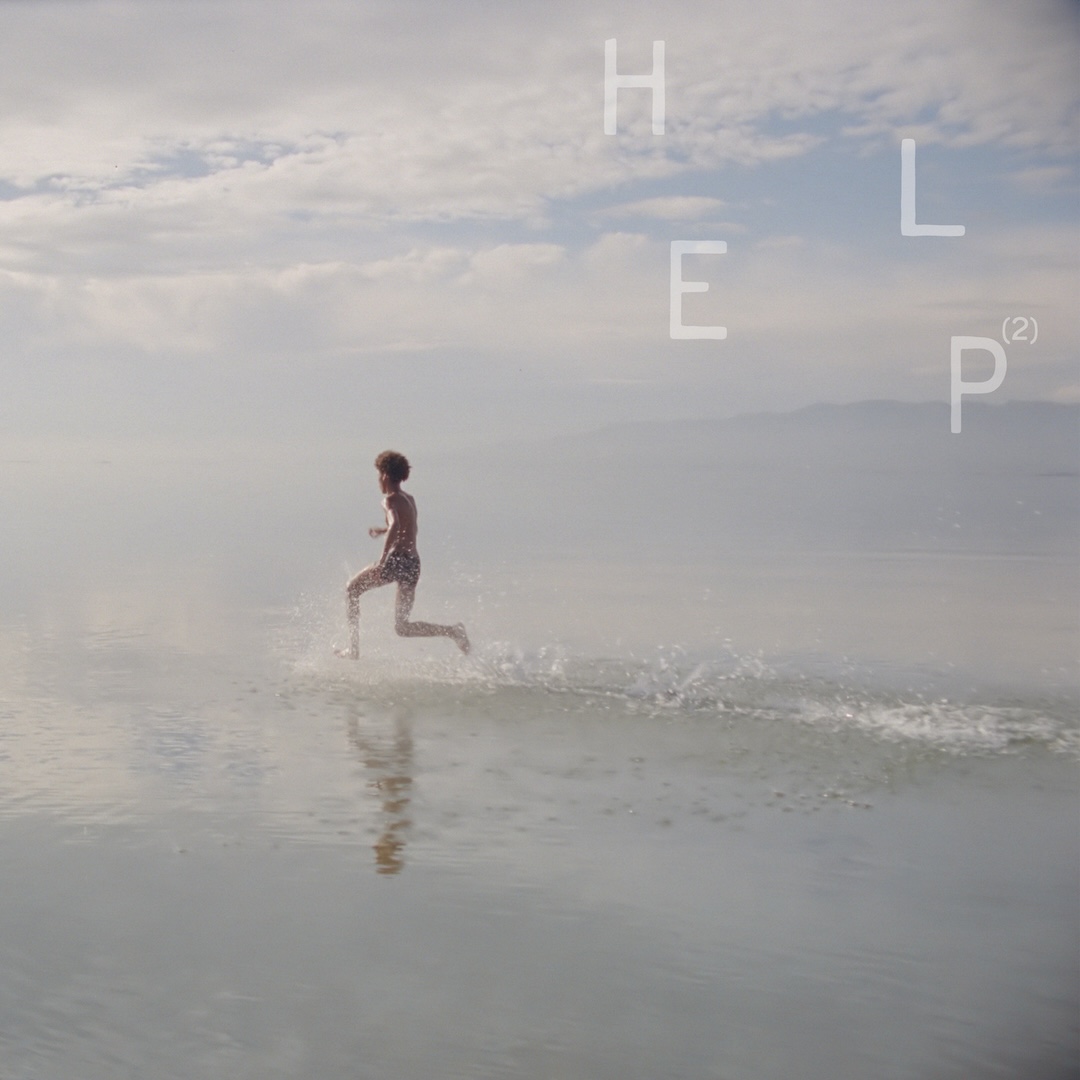
Back in the 1990s, War Child released the first Help compilation, which was produced by Brian Eno and featured Paul McCartney, Paul Weller, Oasis, Blur and others. The goal of the compilation was to raise funds for children in war torn areas. While that hasn’t changed, it’s clear that this follow-up album also serves as a protest statement.
That Help (2) happened to be released a week after the U.S. and Israel waged war on Iran is a coincidence, but that’s also just the latest in a string of egregious global events. Throughout the album’s 23 songs, there’s a mix of sorrow and anger that’s inescapable. Some of the contributions might seem politically neutral, but, in the context of the album, even something like Beth Gibbons’ rendition of the Velvet Underground “Sunday Morning” or Olivia Rodrigo’s cover of The Magnetic Fields song “The Book of Love” take on new meanings.
A good amount of the songs on Help (2) are blatantly political, like “Helicopters” from Ezra Collective and Greentea Peng, “When the War Is Finally Done” by Foals and “Begging for Change” byPulp. “Begging for Change” has been in my head a lot because it has that kind of psychedelic monks intro that both The Stooges and Bee Gees used in the 1960s. “We are being strip-mined by the new bourgeoisie, now we’re beggin’” they chant before the tune kicks into heavy garage rock energy and Jarvis Cocker spouts out lyrics that play on the double-meaning of “begging for change.”
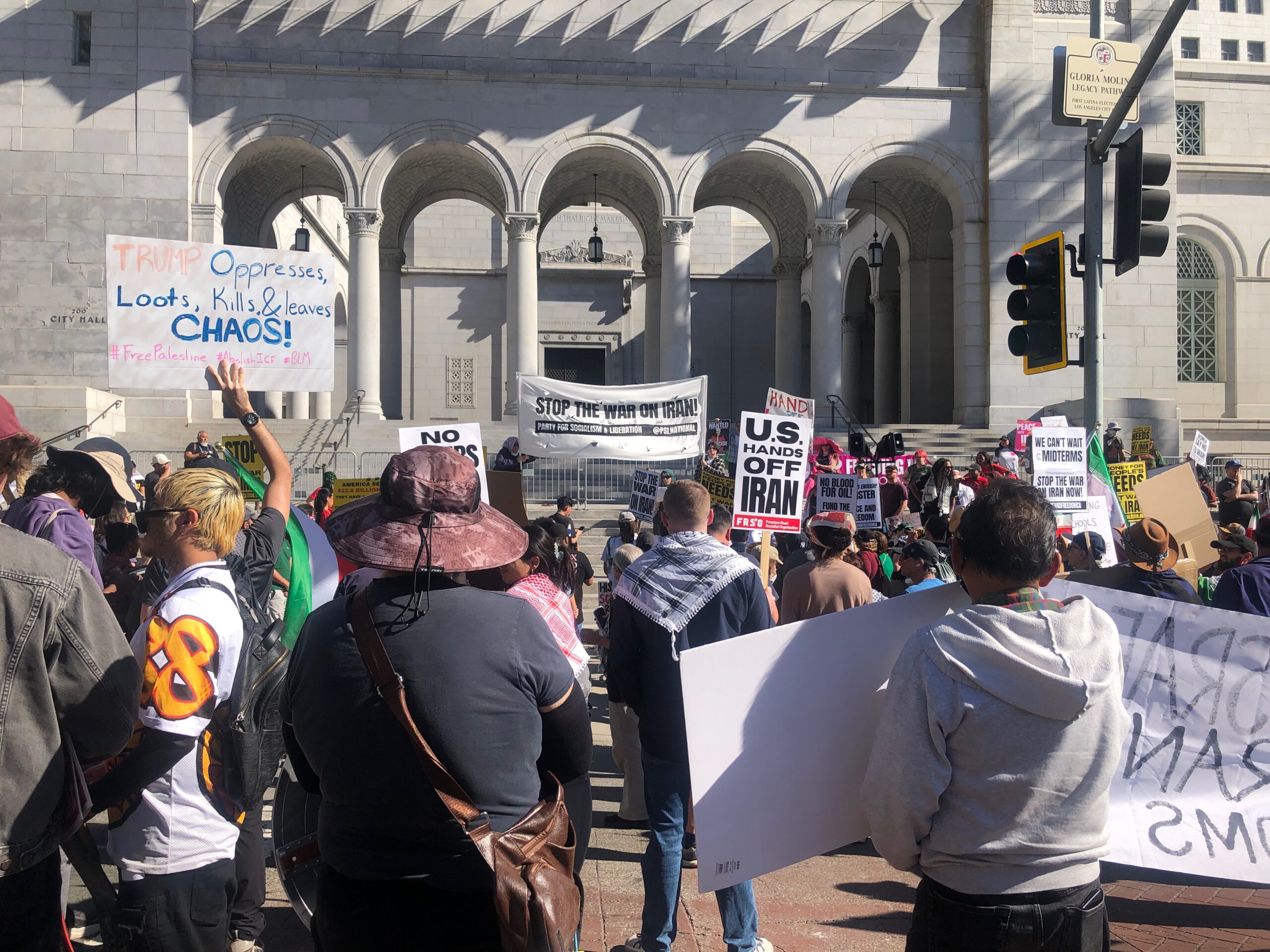
I tried to join in the chants at Saturday’s protest as best as possible, but could hardly get my voice above a croaky whisper thanks to the Santa Anas. Still, the anger and frustration in the crowd was something that resonated with me. Frankly, I’m sick of this shit. Sick of lying politicians who always seem to find some way to keep the war machine turning even when they claim we can’t afford universal healthcare or, really, anything that would better lives here in the U.S. Sick of the mind-boggling justifications for mass slaughter. (At the time of writing this, Al-Jazeera reports that at least 1332 people have been killed since the start of the attack on Iran in late February.) You can’t bomb your way to peace, no matter what the people in power say.
The first thing you might notice at a protest is that they’re rarely about one thing. All struggles are intertwined and speaker after speaker made note of this on Saturday. Iran, Gaza, Iraq, Afghanistan, Latin America and civil rights at home are all interconnected issues that are the result of not just one leader, but an entire system that’s designed to fuel oppression.
Back in 1990, Sinead O’Connor sang about that in her song “Black Boys on Mopeds.” The song is, specifically, about England, but the sentiment absolutely applies to the U.S. as well. Fontaines D.C. cover the song for Help (2) and it’s the most haunting number on the album. Opening with the strum of a guitar, it evolves into something much noisier as Grian Chatten sings verses that are relevant now even if they’re referencing Margaret Thatcher’s era. “These are dangerous days/To say what you feel is to dig your own grave,” might be the most poignant line in the song. We’ve seen time and again how desperate our governments are to stamp out dissent, but they can’t shut us all up. There’s always going to be a protest or a song to remind us that the world doesn’t have to be this way.
Liz O. is an L.A.-based writer and DJ. Follow on Instagram or sign up for the weekly, Beatique newsletter for updates on new stories and gigs.
Listen to Beatique, March 2026 featuring music from The Smiths, Peaches, Charli xcx, Godspeed You! Black Emperor and more.
Related:
My First Protest of 2026 (Probably Won’t Be the Last)
Best of 2025: The Year in Political Songs
David J Sings of History Repeating in New Protest Single, “ICE Too Cold to Thaw”