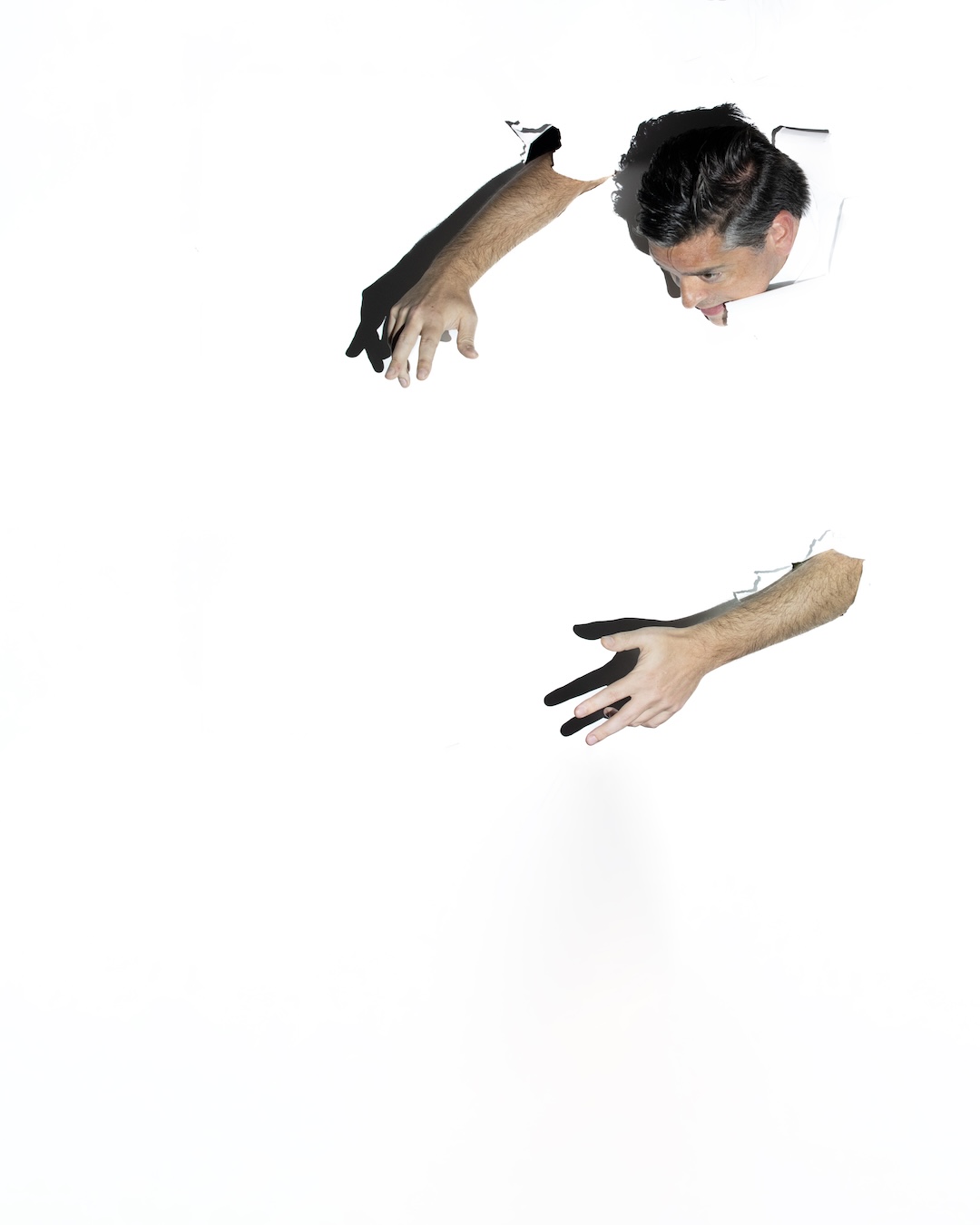
Andrew Becker awoke from a dream with a phrase “the house that kept Hemingway alive” in his head. “Did I make that up or did I read that?” he wondered. So, the LA-based musician, who records as Human Potential, looked around and found an article about the house in Idaho where Hemingway lived until he died of suicide in 1961.
“Out of the four or five houses that he lived in, that’s the only one that is not open to tourism,” says Becker on a recent video call, rain visibly beating against the window of his home in Highland Park. “I found that interesting. Then there are stories about all these people making pilgrimages to the house and trying to climb the fence and get in.”
Becker wrote the song “The House That Kept Hemingway Alive,” which now sits on the latest Human Potential album, Eel Sparkles, as a fictional tale, wherein the late author burns the house, as a commentary on this “macabre take on celebrity.”
On Eel Sparkles, Becker leaned towards narrative in his songwriting. There’s a character in one song, “Do You Remember Albert,” based on his grandmother. Mythological figures appear in the album as well. “It seemed more interesting to me this time to write a little more narratively than cryptically,” he says.
Becker, who previously played drums in the Dischord band Medications and Brooklyn-based Screens, has released seven bands as Human Potential. With each one, he tries to play within a different set of parameters. “There needs to be something new that happens,” he says. The rules can vary. He might try to write on a different instrument or use words that he haven’t previously appeared in his songs. “I have these parameters in place for every record that I do in order to make it feel different. Mainly so I don’t feel bored by the creative process,” he explains.
For Eel Sparkles, Becker wrote some songs on bass. “I’m not really a good bass player or anything, but it was a new medium that I could explore and figure out, hopefully, unconventional ways to do things,” he says.
“Another thing I was doing was rudimentary sampling in a way, take songs from my iTunes library and bring them into my recording program and manipulate them through pitch shift and reverse them and add different effects and chop them up,” Becker adds. He would use the manipulated measures to spark ideas for chords. “For the most part, if I pick up a guitar, I’m going to play something that I usually end up playing,” he says. “It’s just the way that my ear works. I’m drawn towards this chord or these chords or whatever. But by manipulating another song and cutting, sort of chopping and screwing it- that’s an F minor or whatever, something that I normally wouldn’t have played- that leads me down a different path.”
On Eel Sparkles, Becker taps into XTC-style art pop with atmospheric synth flourishes, while flirting with minimalism on “Trepanation” and ‘60s pop on “Practice Songs for the Unloved.” Throughout the album, though, you can hear traces of Becker’s Dischord Records past in his drumming.
“Brendan Canty, the drummer [of Fugazi], he was one of the most influential musicians in my life,” says Becker. “Especially growing up and listening to Fugazi records and playing along to them with my headphones on and stuff like that. He has a particular way of playing that, I just think he’s a really unique drummer. There’s a groove to his playing and, also, the instrumentation- just talking about the way he plays a set- is really cool too. I’m sure that’s just in my DNA. I’ve listened to those records so many times. I had the good fortune of Brendan producing one of my old band’s records, so I got to work with him and that was like meeting one of your heroes.”
While Human Potential has been ongoing since 2014, Becker only started bringing the project to the concert stage last year. So far, he’s played three shows— two in LA and one in Oakland— with his live band.
Working out the songs for live performances has had its challenges. “Mainly just me having to figure out what I did. I think the first couple records, I tabbed out all the guitar parts so I had a record of what I played,” says Becker. “Then I stopped, so it was a matter of going back and figuring out what the fuck I actually played on these songs.”
Plus, he had to tackle the challenge of singing and playing guitar at the same time. “Singing and playing guitar was something that I hadn’t done a bunch of because I didn’t need to,” he says. “I was recording. And these songs aren’t singer-songwriter things. I had to really practice that.” Finding good bandmates took time too, but it did all work out and Human Potential will play a few select shows now that Eel Sparkles is out. They’ll be in San Diego, playing The Black Cat Bar in April, while a Los Angeles show is planned for May 24 at Scribble.
Get Eel Sparkles by Human Potential
Liz O. is an L.A.-based writer and DJ. Follow on Instagram or sign up for the weekly, Beatique newsletter for updates on new stories and gigs.
Listen to Beatique, March 2026 featuring music from The Smiths, Peaches, Charli xcx, Godspeed You! Black Emperor and more.
Keep Reading:
Depeche Mode, Fontaines D.C. and War Child: The Wars Change, But the Protest Songs Remain the Same