At some point in the middle of a conversation with the black watch founder John Andrew Fredrick and producer Rob Campanella the subject shifts to Fredrick’s flip phone. Or, really, it shifts to Fredrick’s unease with technology. “I’m a very right brained kind of person who thinks that technology is killing us,” he says as we sit on the back patio of the Echo Park bookstore/cafe Stories, “and I don’t want to be the sort of person who is staring at a phone all the time or going on Tinder or anything along those lines at all.”
That’s fair. Technology probably is killing us and scrolling is tedious. Plus, Fredrick’s flip phone has become a conversation-starter in its own right. “It’s a way to make people chuckle. They want to touch it and consider me a relic, which is fine. I don’t care,” he says.
“Brian Wilson isn’t the only guy who just wasn’t made for these times,” he adds. “I was not either.”
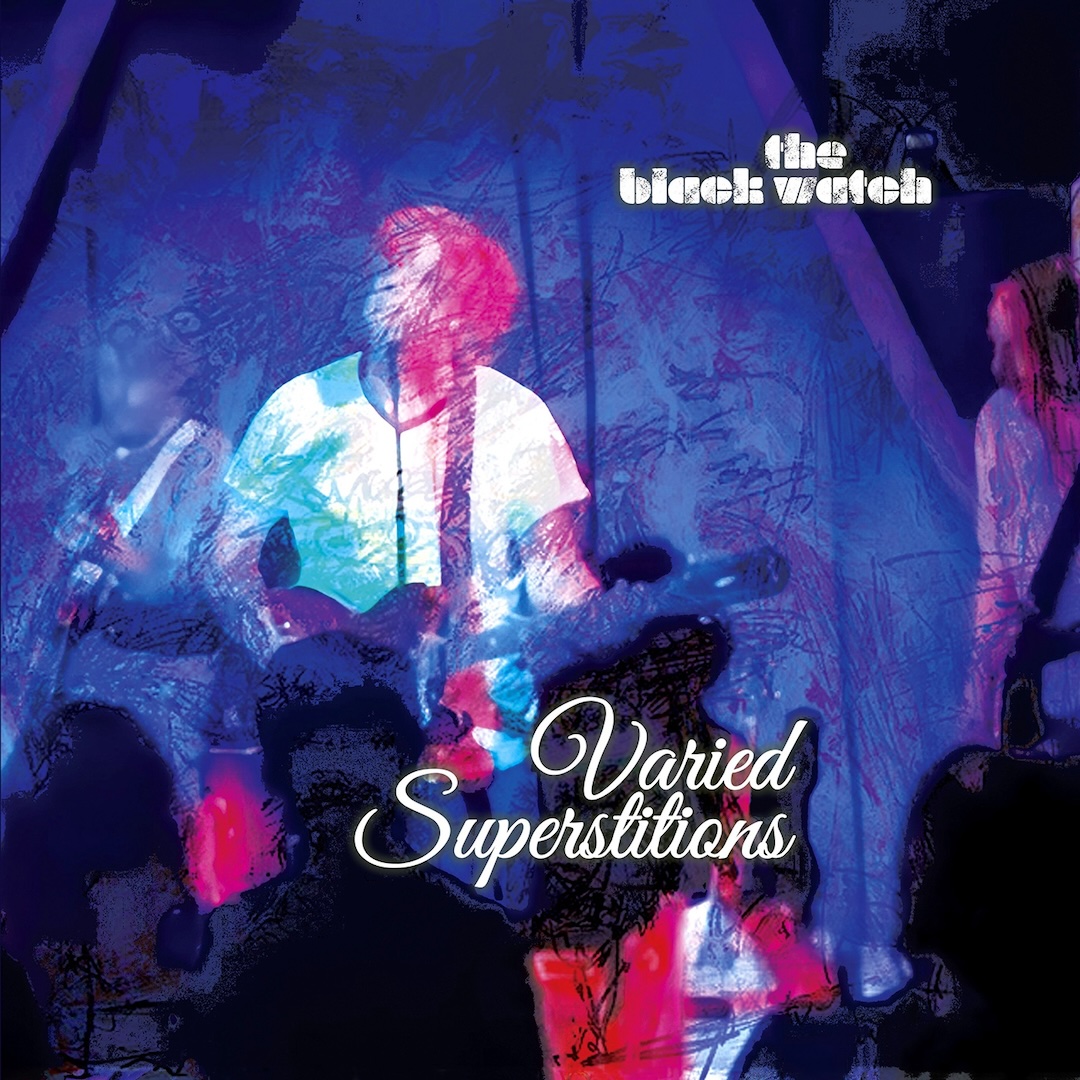
So too is Fredrick’s band, the black watch, not made for these times. It’s rabbit hole music, the sort of referential indie pop that could send the listener in search of a dozen other musicians or books or movies not because an algorithm suggested them, but because the band did. If Fredrick’s Brian Wilson reference prompts you to search for the Beach Boys song, “I Just Wasn’t Made for These Times,” then you understand rabbit hole music. And if you start humming a certain Stevie Wonder song when you read that the title of the new black watch album is Varied Superstitions, then you probably are his audience.
Fredrick launched the black watch in the late 1980s, when he was living in Santa Barbara. He released debut album St. Valentine on his own label, sending out copies to zines and college radio stations, hoping for a response. “I think that the best thing that ever came from the early records was people writing about us and comparing us to people I had never heard,” he says. Fredrick recalls a review comparing the black watch to American Music Club, the band that singer-songwriter Mark Eitzel led throughout the 1980s and into the first half of the ‘90s. He went out and bought one of the band’s cassettes and was flattered by the comparison. “American Music Club are incredible,” Fredrick says. Rabbit holes aren’t just for the fans.
Fredrick, the sole constant in the black watch, has kept the project going for over 35 years now, releasing a total of 26 albums to date. For the past decade or so, the black watch has functioned less as a band and more like a collective, with associates who pop in and out for recordings and the rare live show. Campanella has long been part of the fold as both a producer and a musician. The two had been acquainted with each other likely going back to the 1990s, when Campanella was in the band The Quarter After, but it was probably a meeting at Stories years later that brought about their collaboration. “I think you handed me a homemade CD of Led Zeppelin Five,” Campanella says to Fredrick of the fateful encounter.
Led Zeppelin Five, by the way, is actually a black watch album. Fredrick titled another album Jiggery-Pokery in reference to a crack John Lennon once made about George Martin’s production. There are a lot of music nerd in-jokes throughout the black watch’s catalog. Literary references make their way into the songs as well. After all, Fredrick is also an author, whose bibliography includes multiple novels and a book on Wes Anderson’s early films, and a former college professor. As a lyricist, Fredrick resists oversimplifying language- it’s not a bad thing if you need to turn to a dictionary while listening to the black watch- and tries to avoid cliches “almost to the point of paranoia,” even though he admits that’s difficult to do in the context of a pop song.
“Those are the things that people relate to sometimes, but I don’t want to pander at all. I can’t. I can’t do it,” he says. “I’m a Virgo. I can’t pretend.”
Instead, he might respond to a cliche, like in “It Is What It Isn’t.”
“I eschew rigorously all of those cliches that people stay, stuff like ‘it is what it is’ or ‘everything happens for a reason.’ Phrases I absolutely hate,” he says. “My temptation is to always go, what if it happened because the world is utterly chaotic and we don’t know the provenance of anything at all. It didn’t happen for a reason. It’s just your way of goddamn rationalizing something or whatever.”
“It Is What It Isn’t” inverts the cliche while also commenting on the assumptions that people make. “I thought I would base a song on the ideas of how people make assumptions about you, if you have a fancy education, that you think alike or you have the same sorts of beliefs. In Los Angeles, in particular, there’s a proliferation of that,” he says. “It’s me in my muted way kicking against the pricks to point out little things here to people without becoming some sanctimonious prick myself.”
Over the course of recording, the song morphed into a seven-minute space rock jam. “The original song was probably only three or four minutes long,” says Campanella. Fredrick and Campanella had sent the song to their friend, Misha Bullock, to add drums. He did that, but sent along some extra guitar parts too. “We all had these cool guitar parts that you couldn’t cram all together in four minutes,” says Campanella.
“We got to be just like the Beatles on side 2 of Abbey Road for four glorious minutes,” adds Fredrick, the tone in his voice indicating exactly who his favorite band is.
“Everybody’s cool guitar parts would be playing at the same time, so I just made the song longer and longer,” Campanella explains. “I think I called Misha and told him to do some extra fills and stuff like that, that he sent me for the ending jam.”
“It’s quite perverse of us as well,” says Fredrick, “because we’re going to release it as a single and then what kind of chance does a seven minute single have in this world of attention spans being minimized.”
That’s the other thing about the black watch. It’s music for people who have managed to retain some of their pre-smart phone attention span. That’s not because the songs are particularly long, most aren’t, but because there’s a lot going on them, both musically and lyrically. You can hear that on the album in “Jolly Melancholy,” a song that sounds like its title. “Yeah, there’s a certain sort of onomatopoeia there,” Fredrick agrees.
“I’m a really happy person who has these spells of deep melancholia. I think it comes from anyone who has read deeply, thought deeply, has written,” he adds. “I like really sad music. That’s who I am. The jolly melancholy.”
Then there’s “No, I Shouldn’t,” which sounds like “Revolution 9” playing in the Twin Peaks Red Room. It’s a trip that balances out the straight-forward songs on Varied Superstitions, of which are there are plenty of gems.
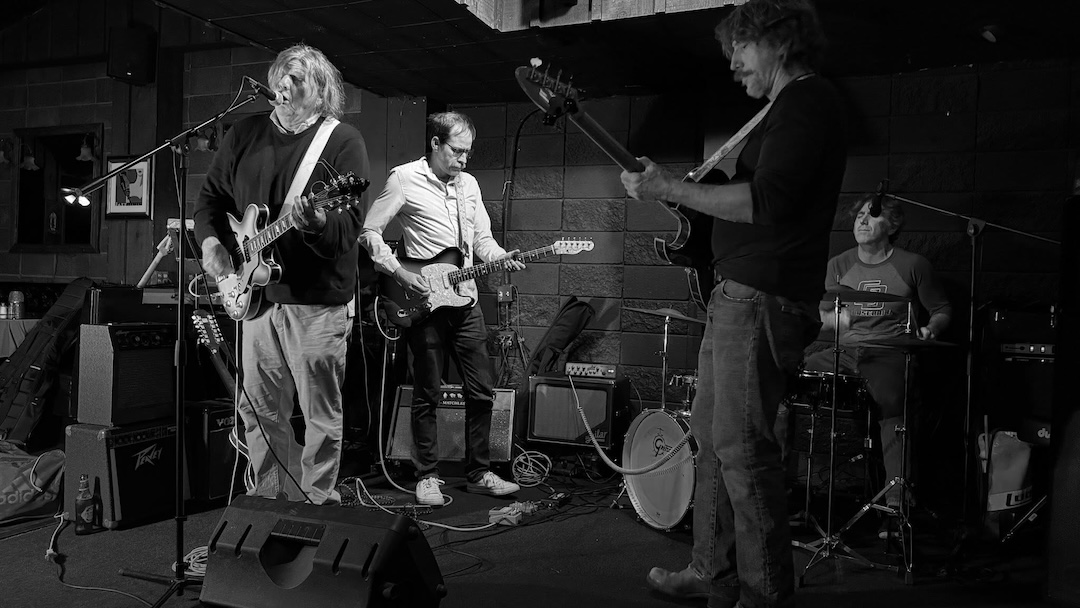
Rising to the top of the bunch, though, might be “Some People Will Believe.” I didn’t realize how much I loved that song until I caught the black watch live a few weeks after the interview at The Barkley, an old school bar in South Pasadena where cash is still king and celebrity autographs hang above the leathery booths. Fredrick played a with a band that included Rob Campanella on bass, Andy Campanella on drums and Andy Creighton on guitar and together on stage they brought out an Echo and the Bunnymen quality in the song that I hadn’t heard on the album. But, it’s the song’s lyrics, about human gullibility and how people take advantage of it, that have stuck with me. The lyrics are vague enough where you could apply them to any period of time, yet specific enough where you will think that this is a song written precisely for the moment in which you first heard it. And, really, I think that’s what makes the black watch not of this time. It’s a band that doesn’t belong to a specific era, but, instead, connects various eras bringing us into the present moment.
Liz O. is an L.A.-based writer and DJ. Follow on Instagram or sign up for the weekly, Beatique newsletter for updates on new stories and gigs.
Hear the black watch, plus songs from The Smiths, XTC and more on the March, 2026 edition of Beatique on Mixcloud.
Keep Reading:
Lapêche Dance Through Third Album, Autotelic
Moviola Captures the Difficulty and Absurdity of American Life on ‘Earthbound’
Rain Parade Reintroduces Listeners to Crashing Dream with New Deluxe Edition