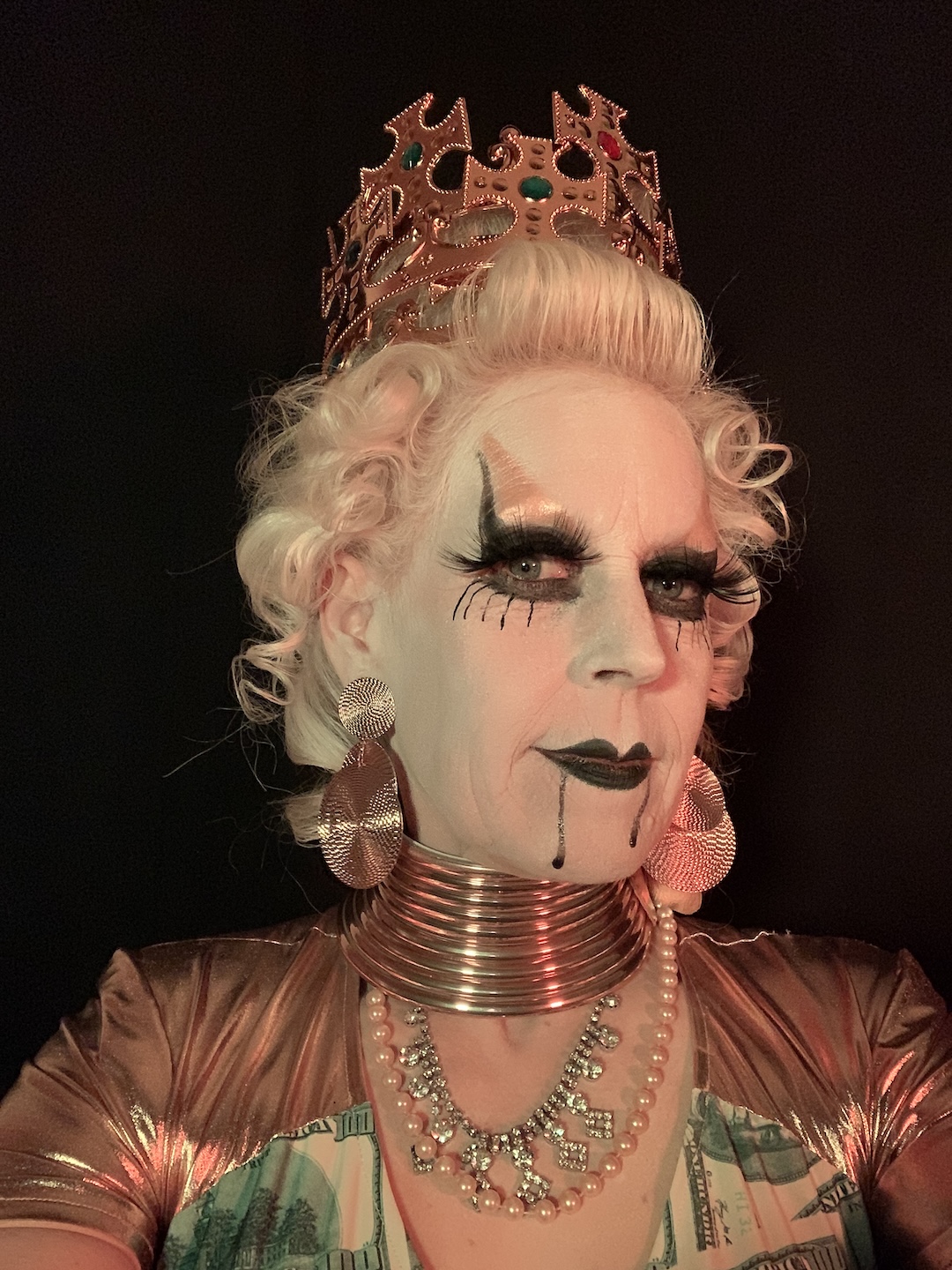
In her video for “Fist in a Honeypot,” Mignon cuts a regal figure, decked out like a Marie Antoinette for late stage capitalism. With Benjamins dripping from her cage skirt, and more bills doubling as a fan, she sips tea and spits out lines like, “money to cheat for/they rob you.” Both the costume, made by the singer herself, and the song are a commentary on today’s “let them eat cake” elite.
“It’s about people having too much money,” Mignon says with a laugh about what she describes as the most anti-capitalist of her new batch of songs.
The first time I heard Fenian, the new album from Kneecap, was at a listening party in January. It was a private thing- mainly press and industry, I think- in the back room of an LA pub where the album played once and I spent the bus ride home scribbling notes about the album’s clubby flow, its nods to ‘90s hip-hop- there’s definitely a Wu-Tang energy in there – and the killer drum ’n’ bass track in the middle of Fenian. This isn’t an overstatement or the result of a hype-buzz, but I was genuinely excited for the new album.
The second time I heard Fenian was roughly three months later, on the album’s May 1 release date. In between, I had amassed the digital singles- the album’s title track is now one of my current favorites to play when I DJ at Underground– and scrolled through enough posts that half my Instagram timeline would have me convinced that this is the most anticipated album of the year. TBH, I’m not sure if that’s the case for anyone but myself. But, whatever. Fenian is top-tier album.
Maybe the best place to start talking about Kissing Luck Goodbye is at the end of the latest album from ADULT. Just when you think “Destroyers” is done, an electronic swoosh gives way to what sounds like traffic noise. Then, Nicola Kuperus’ voice reappears, singing, “We pay the price for those in power/Exploiting you, exploiting me/Consuming you, consuming me.”
I’ve had an advance copy of Kissing Luck Goodbye for a good minute and have now listened to it enough times to be somewhat haunted by the album’s finale. Listening to “Destroyers,” I think about how we’re literally paying the price for those in power every time we go to a store or restaurant and notice how things are ever-so-slightly more expensive than they were the week prior. We are being exploited, by politicians, by Big Tech, by virtually every corporate entity. We know this and, yet, it seems like there’s no way to stop it.
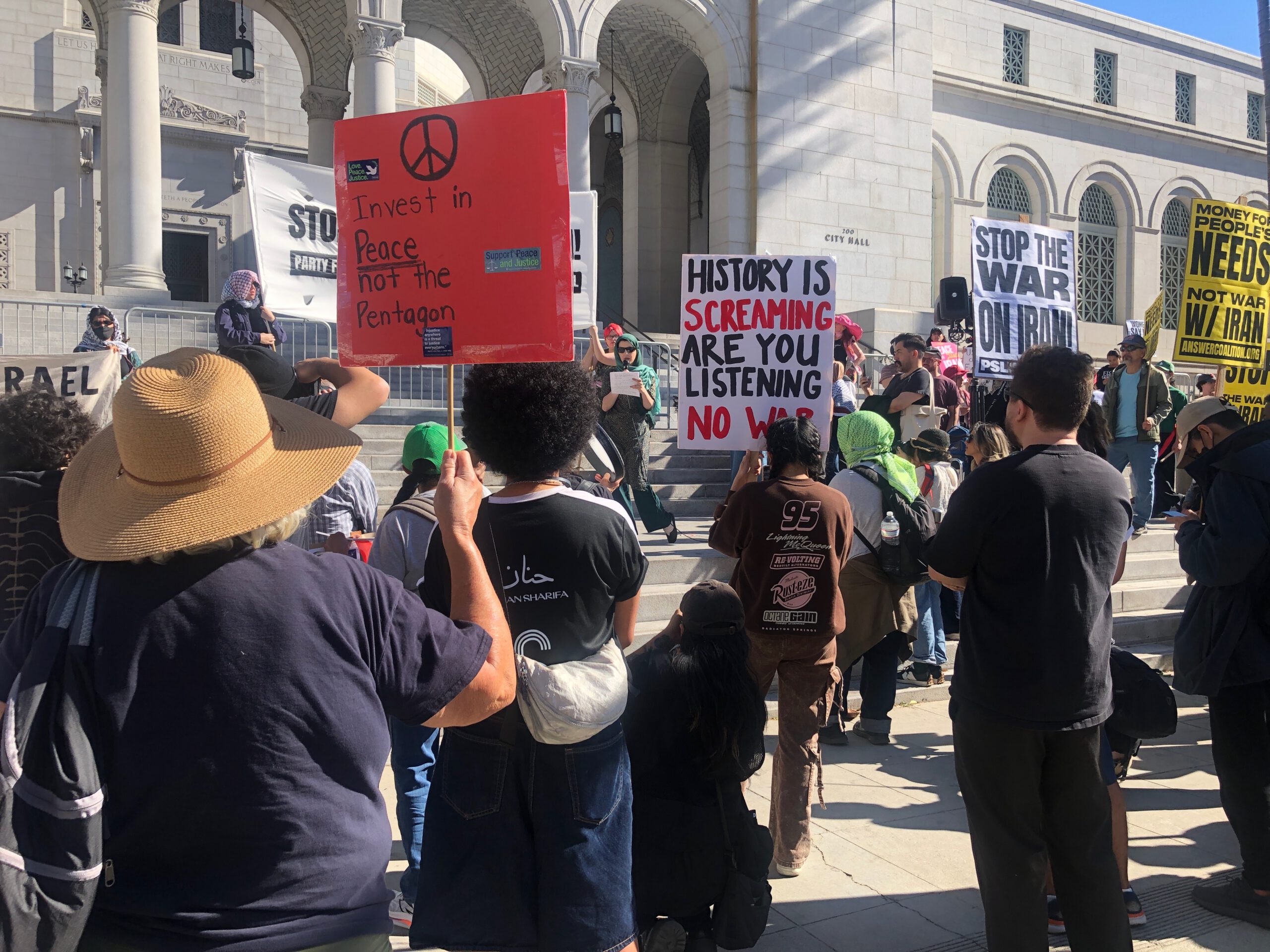
Protesting outside City Hall, March 7, 2026 (Pic: Liz O.)
As the Santa Ana winds whipped through Los Angeles, downtown protestors clung to signs that read, “Invest in peace not the Pentagon” and “War crimes don’t hide sex crimes.” A string of activists spoke on the steps of City Hall. They led us in a run of chants all of which could be summarized in one point: end the wars.
Before walking to the Saturday afternoon protest, I listened toHelp (2), the War Child compilation album that came out on Friday, for the second or third time. On it, Depeche Mode covers “Universal Soldier,” written by Buffy Sainte-Marie in the early 1960s. It’s a striking condemnation of war made all the more ominous when performed as a dark, synthpop song. Listen closely and you might swear you hear jets in the background. Even if you’re only playing the song in the background, you can’t miss the resignation in Dave Gahan’s voice when he delivers the closing line, “this is not the way we put the end to war.”
The vibe in downtown Los Angeles for 2025. (Pic: Liz O.)
For the first of Beatique’s Best of 2025 lists, I wanted to highlight political songs for a very specific reason. Politics aren’t brand safe. You’ll risk alienating the people who disagree with you. You might scare off the companies who would otherwise want to work with you. Blah blah blah. But, at a certain point, if you’re someone with a platform, be it music, art, film or writing, you will need to ask yourself, “Am I a brand? Or am I a human being who actually gives a shit about what’s happening in the world?” Hopefully, the latter is the answer.
Particularly in this moment, we need artists who are willing to be outspoken. For every semi-anonymous person (or bot) chiding you to “stick to the music,” there will be many more motivated to say, I’m against this too. Some might go to a protest, or write their local representatives or get involved with activist group. Maybe music can’t change minds, but it can prompt the quieter people to raise their voice. And, maybe, years from now, kids listening to the 2025 throwbacks will hear that there were people against genocide and fascism and exploiting workers and everything else that’s coming to a head right now. That said, much respect to the eleven artists on this list. They are by no means the only people making political music in 2025, but they made the songs that have been in my personal rotation. In keeping with an egalitarian theme, this list is not ranked.
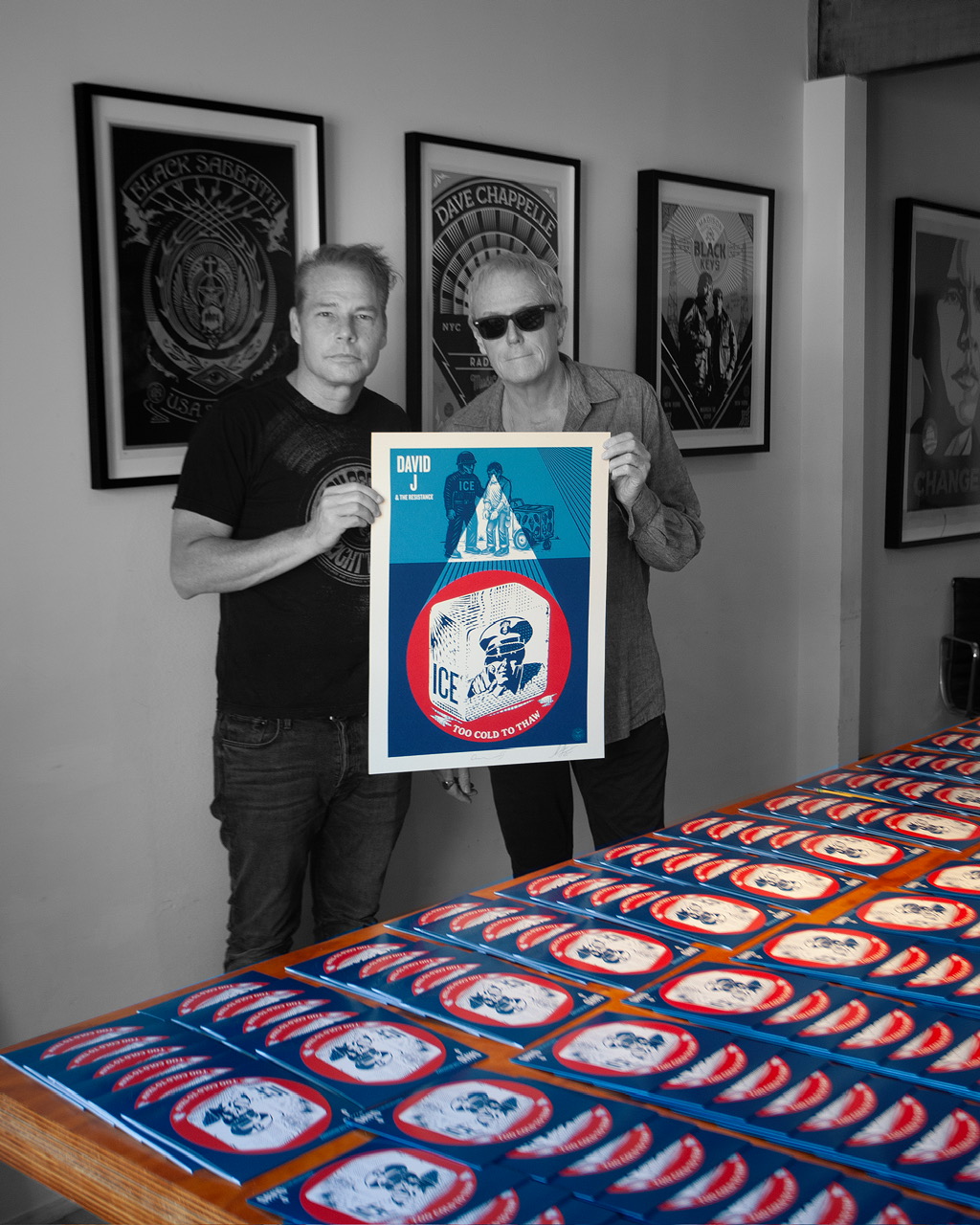
David J and Shepard Fairey seen here with copies of the “Ice Too Cold to Thaw” vinyl and print. (Photo: Angel Enciso)
David J was in Asheville, North Carolina for a gig when a protest erupted right under his hotel window. “I was woken up early in the morning with the sound of it,” the L.A.-based musician says on a recent video call. “I just went down to the street and joined in.”
The event provided a spark of inspiration for J, who was already troubled by what he had been seeing in the United States. “Just being amongst that community there, just really good decent people speaking out against this authoritarian horror that’s being visited upon us, that was the galvanizing moment,” he says. Lyrics for what would become “ICE to Cold to Thaw,” the recently released single from David J and the Resistance, began to take shape.
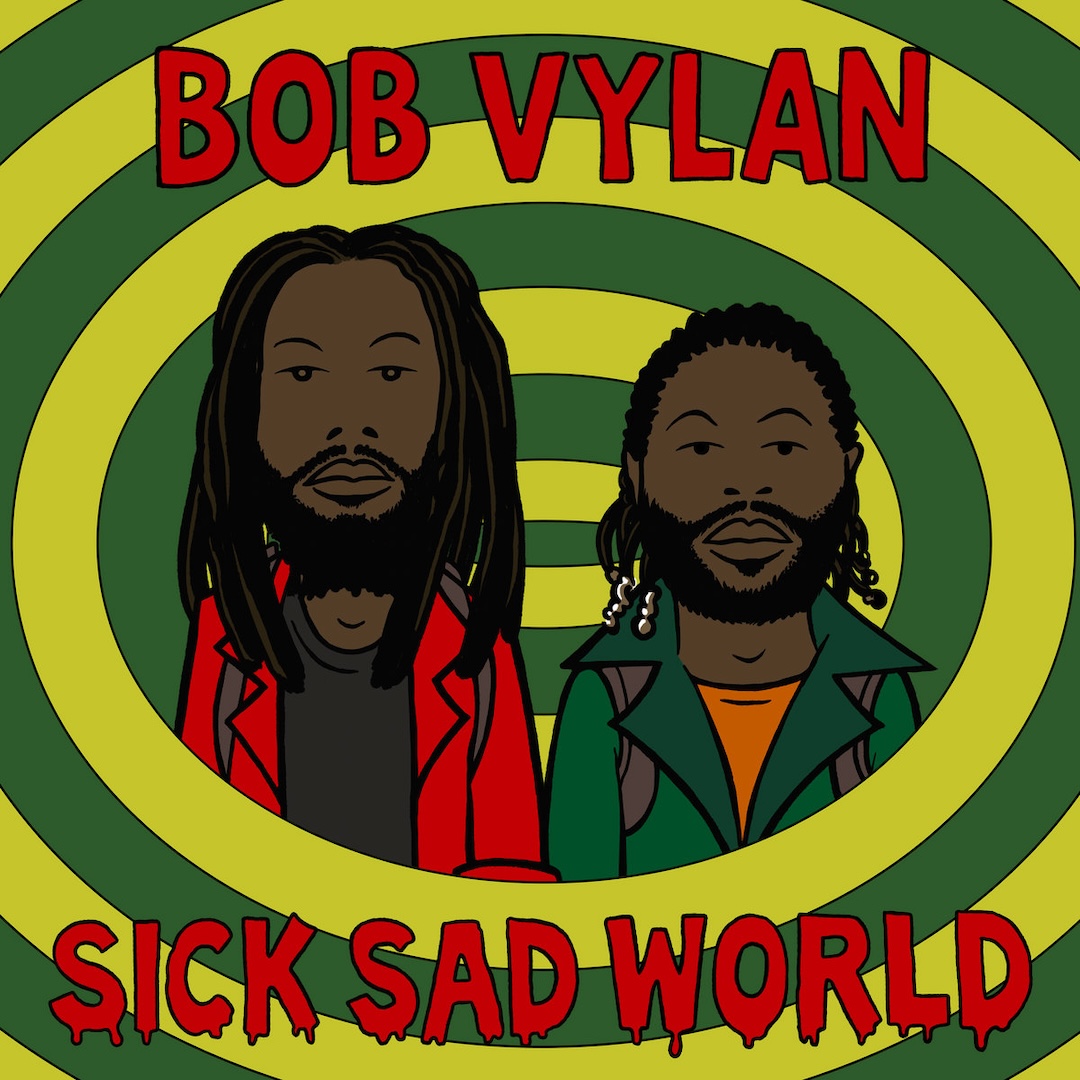
It’s late. The club has ended and I’ve been in the DJ booth all night, so I’m both exhausted and loquacious. We’re talking music and the conversation jumps from Fontaines D.C. to Kneecap to Bob Vylan with a hundred different asides. My mind is a jumbled reflection of my Instagram feed, which is how the English duo came up in conversation. My friends don’t know too much about Bob Vylan, but they’ve been high on my timeline for months, so I get into the whole story about the Glastonbury incident and how they don’t have a tour visa for the U.S. now. It’s all documented in this story from The Guardian, but the details sound particularly absurd when you’re recounting them aloud. Then again, just about everything in the news sounds more absurd out loud these days.
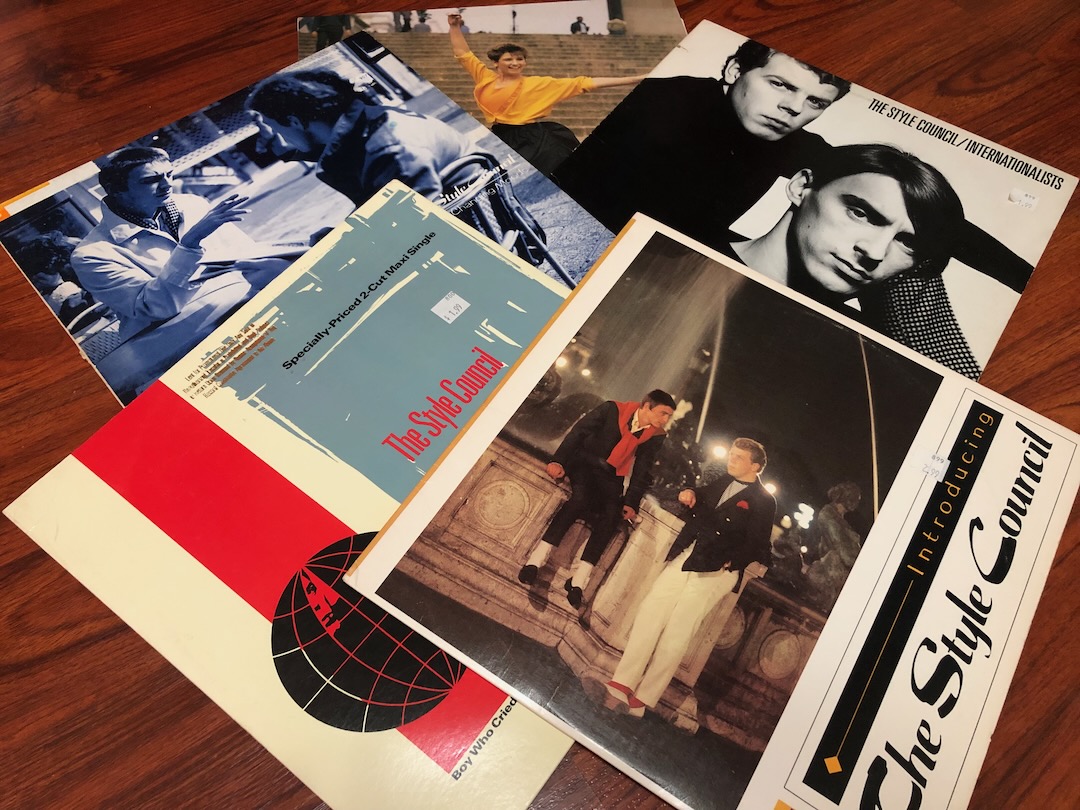
My tiny collection of Style Council vinyl (Pic: Liz O.)
I was holed up in a hard-to-find shady corner of Grand Park, watching the crowd and taking nearly illegible notes during the Fighting Oligarchy rally when the familiar opening notes of a song caught my attention. Style Council? It was “Shout to the Top,” I knew that for certain before Paul Weller’s voice came in with the first verse. But, here? At a political rally in the U.S.?
That’s weird, I thought, but whoever added the song to the playlist deserves some props. “Shout to the Top” was a good choice, thematically appropriate with the lyrics, “and when you’re down on the bottom/there’s nothing else/but to shout to top.” Still, your average American has little-to-no-idea who Paul Weller is. They might have heard “A Town Called Malice” or “My Ever Changing Moods” somewhere in their lifetime, but they probably do not know that both come from the same guitar hero/fashion icon— the Modfather, as he’s often called— and that he also has a treasure trove of songs about class politics.